
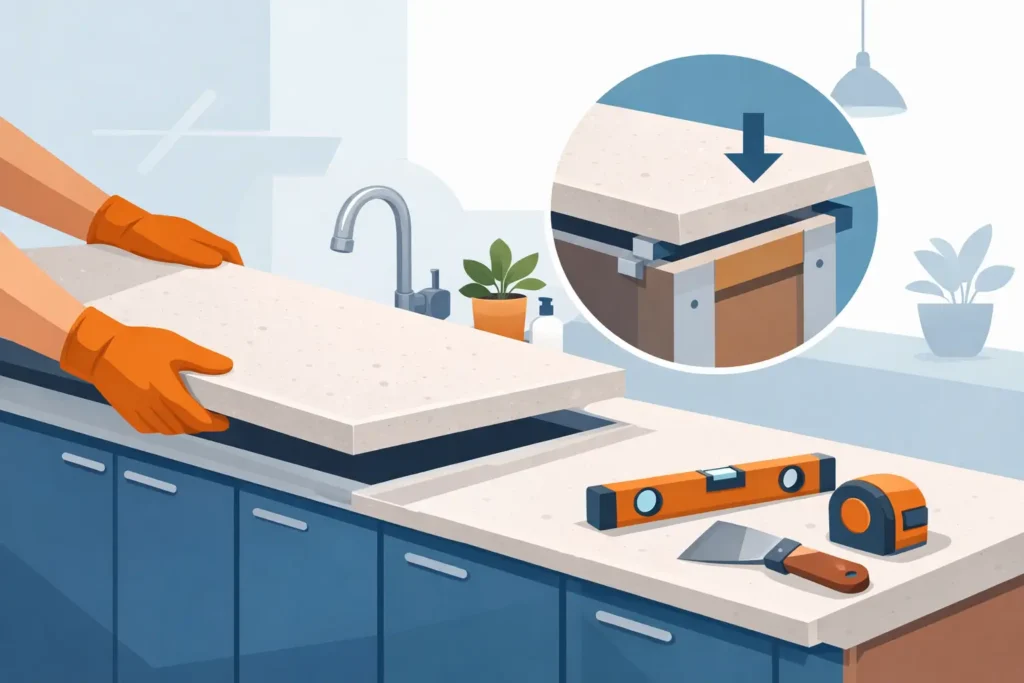
A kitchen can look completely different after a countertop replacement, even when the cabinets stay exactly where they are. So, can countertops be installed over cabinets? Yes – that is how most granite and quartz countertop projects are done. The real question is whether your existing cabinets are sturdy, level, and sized correctly to support the new stone.
For Indianapolis homeowners, flippers, and remodelers, keeping good cabinets can save serious money and cut down on renovation time. But stone is heavy, and a countertop installation is not the place to guess. A quick cabinet inspection before templating helps avoid cracked stone, uneven seams, and surprise repair costs later.
Can Countertops Be Installed Over Existing Cabinets?
New countertops are installed directly on the cabinet boxes after the old countertop has been removed. Granite and quartz do not usually need a plywood deck underneath them in a standard kitchen. The stone is fabricated to sit on the cabinets, with support added where needed for overhangs, large cutouts, and unsupported areas.
This works well when the cabinet bases are solid, properly fastened to the wall, and reasonably level. The installer measures the actual cabinets in place, then fabrication is based on those measurements. That is why measurements should happen after any cabinet changes are complete.
There is one important distinction: installing new stone over cabinets is normal. Installing granite or quartz directly on top of an existing laminate, tile, or old countertop is usually not the right move. An old surface can create height problems, hide uneven spots, and prevent the new stone from sitting correctly. In most cases, removing the old top first gives you a cleaner, safer result.
What Your Cabinets Need Before Stone Installation
Granite and quartz are durable because they are dense and heavy. A typical countertop can weigh roughly 18 to 25 pounds per square foot depending on material thickness and design. A standard run of kitchen counters can add several hundred pounds across the cabinet bases.
That does not mean you need brand-new cabinets for stone. Plenty of older cabinets in homes around Indianapolis, Carmel, Fishers, Greenwood, Avon, and Westfield can support a new countertop just fine. They simply need to be in good working condition.
Strong cabinet boxes matter more than pretty doors
Open a few cabinet doors and look inside. The boxes should feel firm when you press on them. The face frames should not be pulling apart, the bottom panels should not be sagging, and the cabinets should not wobble when weight is applied.
Cabinet doors can be dated, scratched, or ready for new hardware without affecting countertop installation. Structural damage is different. Water damage under a sink, swollen particleboard, loose fasteners, or a cabinet base that has separated from the wall should be repaired before the stone arrives.
Level cabinets make for a better finished top
Countertops can be shimmed and adjusted during installation, but a severe slope is not something to ignore. Stone needs consistent support. If cabinets are noticeably out of level, installers may need to correct them before setting the countertop.
Small variations are common in older homes. Major dips, twists, or height differences can affect backsplash lines, seams, and how your countertop meets the wall. A professional measure is the best time to catch those issues, before fabrication starts.
Sink cabinets deserve extra attention
The sink base is often the first place cabinets show age because plumbing leaks happen there. Check the floor of the cabinet, the back panel, and the sides for soft wood, discoloration, mold, or swelling.
A new undermount sink is supported differently than a drop-in sink, and the countertop will have a cutout fabricated for the sink you choose. If the sink base needs reinforcement or repair, handle it ahead of installation. It is much easier to fix a cabinet when a heavy countertop is not already sitting on it.
When Existing Cabinets Should Be Repaired or Replaced
Keeping your cabinets is usually the budget-smart choice when they are structurally sound and the layout still works for your family or tenants. However, there are times when putting premium granite or quartz on old cabinets does not make sense.
Consider repairs or replacement if the cabinet boxes have widespread water damage, if the cabinets are pulling away from the wall, or if you plan to change the kitchen layout soon. It also may be worth replacing cabinets if you want a larger island, deeper drawers, a different sink location, or better storage. Installing stone now and moving cabinets later means paying for fabrication again.
For rental properties and flips, the decision often comes down to where the money makes the biggest difference. Solid cabinets with fresh paint, updated pulls, and attractive quartz can look like a full kitchen remodel without the cost of a full cabinet replacement. On the other hand, badly worn cabinets can make even a beautiful countertop look like an unfinished project.
Countertop Height and Other Things People Forget
Removing an old countertop and installing a new one can change the finished height slightly. Most granite and quartz countertops are commonly fabricated at 3 cm thickness, which is close to 1 1/4 inches. Laminate tops and tile assemblies can be thinner or thicker depending on how they were built.
That difference can affect a few details around the kitchen. Dishwashers need enough clearance to slide out for service. Ranges need to sit at the right height beside the new counters. Existing backsplashes may leave a gap after an old top is removed, especially if the new material has a different thickness.
Plumbing also needs planning. If you are changing from a drop-in sink to an undermount sink, expect the faucet, drain connections, garbage disposal, and water lines to need adjustment. The countertop crew sets the stone, while a plumber typically reconnects plumbing afterward. Planning that sequence keeps the kitchen from being out of commission longer than necessary.
Overhangs, Islands, and Support Requirements
Standard countertop overhangs at the front of base cabinets are usually not a concern. Larger breakfast bar overhangs, raised seating areas, and long island spans are different. Stone can crack if too much weight is placed on an unsupported section.
The amount of support needed depends on the material, thickness, cabinet layout, and depth of the overhang. Some projects need steel brackets, corbels, or hidden support plates. An experienced countertop professional will identify those needs during measuring rather than hoping it works out on installation day.
This is especially relevant for quartz. Quartz is an excellent low-maintenance choice, but it is not indestructible. A wide unsupported overhang can be vulnerable when someone leans on it, sits on it, or climbs up to reach a cabinet. Granite has its own support requirements as well, particularly around cooktop and sink cutouts.
A Better Way to Plan the Project
The smoothest countertop jobs follow a simple order: make cabinet repairs, finalize your sink and appliances, select the stone, measure the cabinets, fabricate the pieces, then install. Trying to select a sink after fabrication or changing cabinet dimensions after measurements can create delays and added expense.
At Granite Networks Indy, we help customers make these decisions without sending them through weeks of showroom shopping. You can select the actual granite or quartz slab at a partner warehouse, get clear square-foot pricing, and have the project measured around the cabinets you already own. If countertop removal, a new sink, or natural-stone resealing is part of the job, those details can be planned from the start.
The best next step is not tearing out cabinets just because the counters are dated. Check whether the boxes are solid, confirm that the layout still serves you, and let a professional measure the space before making final decisions. Good cabinets can give a new stone countertop the strong foundation it needs for years of everyday use.