
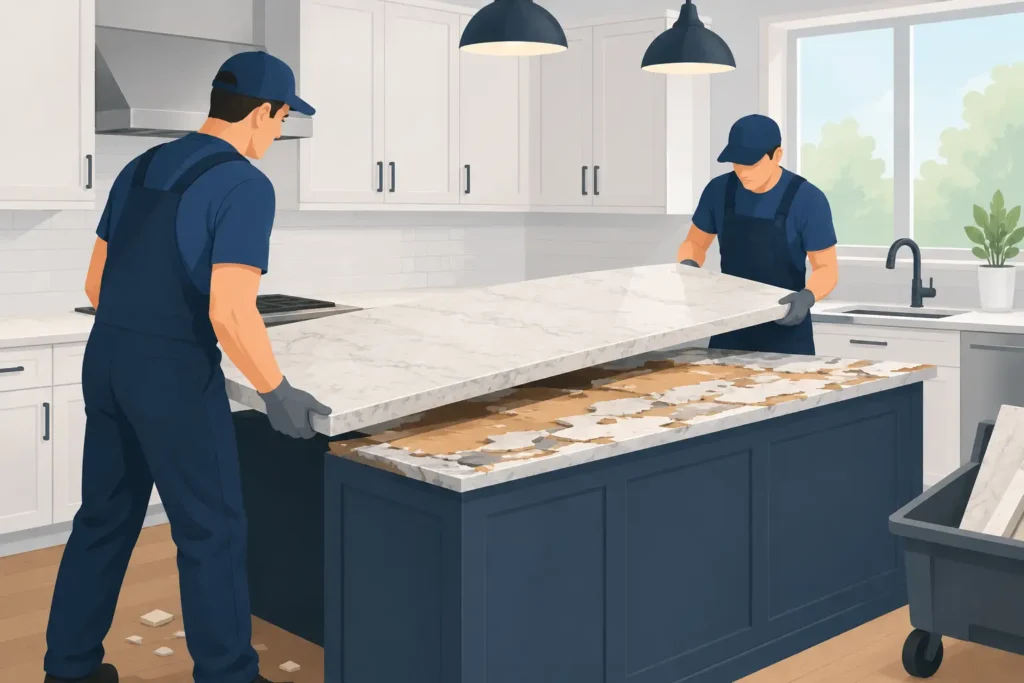
A residential countertop removal service is not just a crew showing up, breaking up old tops, and hauling them away. Done correctly, it is the first step toward a clean, properly fitted granite or quartz installation. Done carelessly, it can leave you with chipped backsplash tile, damaged cabinets, plumbing surprises, and delays you did not plan for.
For homeowners around Indianapolis, Carmel, Fishers, Greenwood, Avon, and Westfield, the goal is simple: get the old countertop out, protect what is staying, and get the new surface installed without turning a kitchen upgrade into a week-long mess. That takes planning before removal day, not just muscle on removal day.
What a Residential Countertop Removal Service Should Handle
Countertops are tied into more parts of a kitchen than most people realize. They may be adhered to cabinet rails, caulked to walls, connected to a sink and faucet, surrounded by tile, and carrying a cooktop. The removal process needs to account for all of it.
A professional service starts by looking at the existing top material. Laminate, cultured marble, solid surface, tile, granite, and quartz all come out differently. Laminate is often lighter but may be heavily screwed or glued down. Tile removal can create dust and may affect the substrate underneath. Natural stone and quartz are extremely heavy, and large pieces can crack unexpectedly while being moved.
The team should also identify what is staying in place. Are you keeping the cabinets? Is the existing tile backsplash staying? Is there a wall-mounted faucet, drop-in sink, or cooktop to disconnect? Those answers affect the removal method and the amount of prep required.
A good removal job is controlled. The old countertop is cut or separated where needed, lifted in manageable sections, and moved out without treating your cabinets like disposable framing. Some minor touch-up work can be normal, especially with older cabinetry, but cabinet damage should never be accepted as part of the process.
Why Countertop Removal Is Best Planned With Installation
Homeowners sometimes arrange removal first, then begin shopping for replacement countertops. That can work, but it often creates an avoidable gap where the kitchen is unusable and exposed. Without a countertop, the sink may be disconnected, cabinets can collect dust, and meal prep becomes a lot more complicated.
The smarter approach is to coordinate removal around the new countertop schedule. Measurements, stone selection, fabrication, and installation all need to line up. Once the new granite or quartz is ready, the old tops can be removed as close to installation as possible.
There are exceptions. If you are replacing cabinets, repairing water damage, changing the kitchen layout, or doing a larger renovation, removal may need to happen much earlier. In that case, your contractor needs a clear plan for cabinet work, plumbing, electrical changes, drywall repair, and backsplash installation before new stone is measured.
At Granite Networks Indy, countertop removal is part of the larger process of helping customers move from an outdated kitchen to a finished stone surface without chasing multiple companies for every step. That kind of coordination matters because the best countertop material in the world will not fix a rushed or poorly prepared installation.
What to Do Before the Crew Arrives
Your kitchen does not need to look perfect before removal day, but it does need to be ready. Clear everything off the countertops, including small appliances, décor, soap dispensers, and dish racks. Empty the cabinet below the sink and any nearby drawers that could collect dust or get in the way.
Make sure there is a clear path from the kitchen to the exterior door. Stone pieces are awkward, heavy, and sharp around broken edges. Moving furniture, rugs, pet bowls, and fragile items out of the path keeps the crew working safely and keeps your belongings protected.
You also need to know how the sink and plumbing will be handled. If the sink is being replaced, it will come out with the old countertop. If it is being reused, discuss that before removal. Reusing an existing sink is possible in some situations, but it depends on its condition, dimensions, mounting style, and whether it fits the new countertop layout.
Plumbing disconnection and reconnection should be clearly assigned. A countertop crew may remove the sink as part of the tear-out, while a licensed plumber may be needed to handle water lines, drains, garbage disposal connections, or faucet replacement. Never assume those details are automatically included. Ask upfront so there are no surprises when the water is shut off.
The Parts of Removal That Can Affect Cost
The cost of a residential countertop removal service depends on more than the number of square feet. A straight run of laminate in an open kitchen is usually much simpler than a tiled countertop with a heavy cast-iron sink, a full-height backsplash, and limited access to the house.
Material matters. Granite and quartz require careful handling because of their weight. Tile can be labor-intensive because each section may need to be broken out and the underlying surface may need attention afterward. Old tops that were installed with excessive construction adhesive can also take longer to separate from cabinets.
Access matters too. A first-floor kitchen with a wide exterior door is easier than a third-floor condo or a home with tight turns, narrow stairs, and no direct route outside. Special situations, such as a cooktop cutout, an oversized island, or cabinets weakened by age or water exposure, should be reviewed before a price is quoted.
The key is transparency. You should know whether removal, haul-away, sink disconnect, plumbing, backsplash work, and disposal fees are included or quoted separately. A low number that leaves out half the job is not a bargain.
Protecting Cabinets and Backsplash During Removal
Many homeowners want new countertops while keeping their current cabinets. That is common, especially when the cabinet boxes are in good shape and the goal is a high-impact kitchen update. It is also where experience counts.
Countertops are usually fastened to cabinet rails with screws, adhesive, or both. The removal team needs to locate fasteners, cut caulk lines, and release the top without prying aggressively against cabinet frames. Older particleboard cabinets deserve extra care because they can swell or crumble after years of moisture exposure near the sink.
Keeping an existing backsplash is possible, but it comes with a trade-off. The old countertop may be tucked behind the lowest row of tile, and pulling it out can expose an unfinished edge, crack grout, or leave a small gap. Sometimes the new countertop covers that area nicely. Other times, a backsplash repair or replacement is the cleaner choice.
Be realistic about what is hidden behind an old countertop. A contractor can work carefully, but no one can promise that decades-old tile, drywall, or cabinet material will behave like new during a tear-out. Clear expectations are better than vague promises.
After the Old Countertops Are Gone
Once removal is complete, the cabinets need to be clean, level, and structurally ready for the new stone. This is the moment to address loose cabinet boxes, water damage, uneven walls, or changes to the sink base. Granite and quartz are not flexible materials. They need solid, properly supported cabinets beneath them.
If new countertops are being installed right away, the installer will position the slabs, check seams and overhangs, secure the material, and set the sink according to the project plan. Quartz and granite both create a major visual upgrade, but the right choice depends on how you use the room. Quartz offers consistent color options and easy daily care. Granite has natural movement and variation, with each piece looking different, and it benefits from periodic resealing.
Avoid reconnecting plumbing or placing heavy items on fresh countertop seams until the installation team says it is ready. Your plumber may need to return after the sink is set, and that sequence should be part of the schedule from the beginning.
Questions Worth Asking Before You Book
Before scheduling countertop removal, ask whether haul-away is included, whether the company protects floors and cabinet faces, and whether they coordinate removal with the installation date. Ask who disconnects and reconnects plumbing, what happens if the backsplash is damaged, and whether your existing sink can be reused.
Also ask when final measurements happen. If you are replacing cabinets or changing the layout, stone should not be fabricated from early estimates alone. Final measurements should happen after cabinets are installed and secured. That is how you avoid a costly fit problem later.
A countertop project should feel exciting, not like a guessing game. Get the removal plan clear, keep the installation timeline tight, and make decisions about sinks, plumbing, and backsplash before the old tops come out. Then you can spend your energy choosing a surface you will be happy to see every morning.