
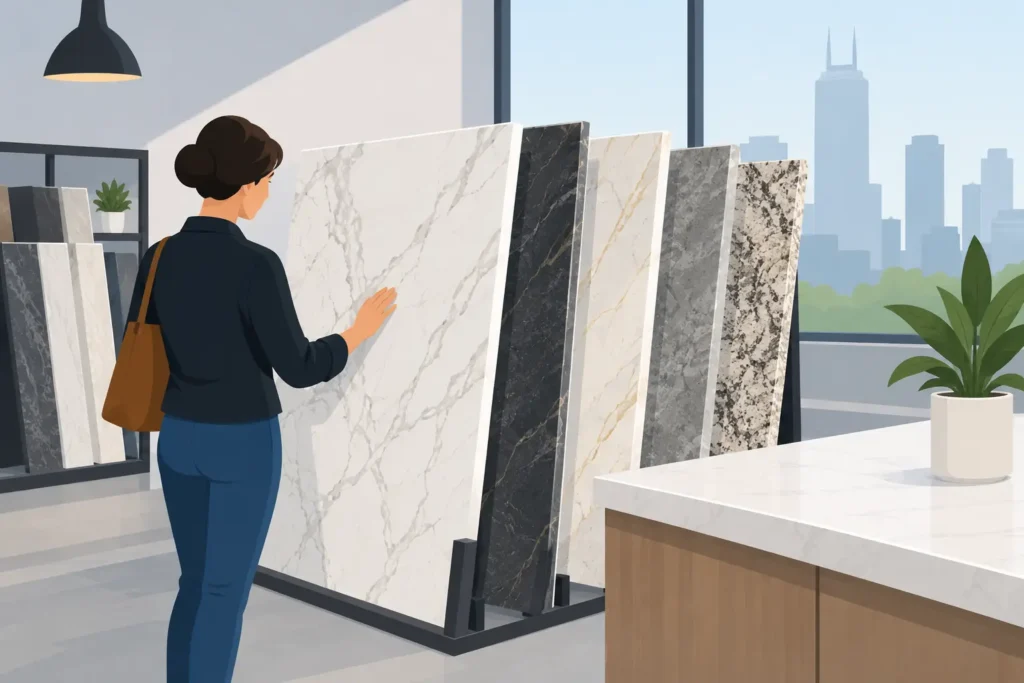
A full countertop slab can be the right call for a large kitchen, but it is often overkill for a bathroom vanity, laundry room, bar top, or fireplace hearth. This slab remnant buying guide explains how to get a great piece of granite or quartz without paying for stone you do not need – and without getting surprised by fabrication or installation costs later.
A remnant can be one of the smartest ways to upgrade a smaller space in an Indianapolis home or investment property. The catch is that remnants are not a one-size-fits-all bargain. The piece has to fit your layout, work with your sink and edge choices, and still look right once the fabricator makes the cuts. A low-priced piece that is too small, cracked, or poorly matched to the room is not a deal.
What Is a Slab Remnant?
A slab remnant is the usable stone left after a larger countertop project has been cut and fabricated. It may be a section of granite, quartz, marble, quartzite, or another surface material. Some remnants are large enough for a double vanity or several small projects. Others are better suited to a single vanity, a shelf, a window ledge, or a small bar.
Do not confuse a remnant with damaged stone. Many remnants are in excellent condition. They are simply the leftover portion of a slab that was already purchased for a bigger kitchen or commercial job. Availability changes constantly, which is why being flexible on color and pattern helps.
For smaller projects, buying a remnant can reduce your material cost because you are not forced to buy an entire slab. At Granite Networks Indy, we focus on the square footage your project needs, then help you find a material option that makes sense for the job.
When a Remnant Makes the Most Sense
Remnants work best when the project is compact, the layout is straightforward, and you have some flexibility in the stone you choose. Bathroom vanities are the most common example. A standard vanity with one sink can often be made from a remnant, especially when there are no long backsplash pieces or matching side splashes required.
They are also a practical option for wet bars, basement kitchenettes, laundry-room counters, office coffee stations, small reception areas, fireplace surrounds, and outdoor grill side counters. House flippers frequently use remnants to give a bathroom or basement a finished, upgraded look while keeping the renovation budget under control.
A remnant may not be the best fit for a large kitchen, a long island, or a project where every surface needs to match exactly. If you need a 10-foot run, a waterfall edge, a full-height backsplash, and a matching island, plan on full slabs or a carefully coordinated material order. Trying to force a remnant into a project that is too large usually creates visible seams, limited color choices, or extra fabrication challenges.
Measure First, Then Shop the Stone
The biggest remnant-buying mistake is falling in love with a piece before knowing whether it can cover the project. A countertop is not just the cabinet width. You need to account for overhangs, sink cutouts, backsplash pieces, eased or decorative edges, and the direction of the stone pattern.
For example, a 48-inch vanity does not necessarily require a 48-inch by 22-inch piece of stone. The finished top may need extra depth, a 1-inch overhang on the front and sides, and material for a backsplash. If the remnant has a vein pattern that needs to run a certain direction, the usable dimensions can shrink further.
This is why a professional measurement matters. Bring rough dimensions when you start discussing options, but let the final measurement drive the fabrication plan. A good fabricator will check cabinet condition, wall irregularities, plumbing location, and whether the sink you want actually works with the available piece.
How to Read a Remnant Before You Buy
When you are looking at remnants in a warehouse, ask for the actual dimensions of the usable piece, not just an estimate. Stone can have rough edges, chips, cutouts, or markings that reduce what is available for your project. The fabricator also needs room to cut cleanly around the finished countertop shape.
Look at the whole piece, not just the front corner. Natural granite has movement, color variation, and veining. That is part of its appeal, but a small sample can look very different once it becomes a vanity top. Quartz tends to be more consistent, although marble-look quartz can have large directional veins that affect how the finished counter looks.
Check the surface for cracks, deep scratches, stains, or repaired areas. Small imperfections near an edge may be cut away. A crack running through the middle of the usable area is a different situation. Be direct and ask whether any repairs are planned, where they will be, and whether they will be visible after installation.
Lighting matters too. Warehouse lighting can make a stone look cooler, warmer, or darker than it will look in your bathroom or kitchen. Take a cabinet door, paint sample, flooring sample, or even a few clear photos of the room. You are not trying to create a perfect showroom match. You are making sure the stone works with the colors already in the space.
Granite or Quartz for a Remnant Project?
Either material can be a great choice. The better answer depends on how the space will be used, what look you want, and what remnants are available when you are ready to move.
Granite gives you natural color variation and one-of-a-kind movement. It works well for vanities, bars, and many indoor or outdoor applications. Natural stone does need periodic resealing, especially in areas that get regular water, makeup, hair products, or food spills. That maintenance is manageable, but it should be part of the decision.
Quartz is nonporous and generally easier to maintain. It is a popular pick for bathroom vanities, laundry rooms, and indoor bars because it resists everyday staining without routine sealing. The trade-off is that quartz remnants can be more limited by color, pattern direction, and available size. Quartz is also not the automatic choice for outdoor projects or high-heat areas.
Do not choose only by the price tag on the remnant. A slightly higher-priced piece that fits cleanly, needs fewer seams, and matches the room better can be the better value once the entire job is finished.
The Costs People Forget to Ask About
The stone itself is only part of a countertop project. Even when you find an affordable remnant, fabrication and installation still require skilled work. The final quote can include measuring, templating, cutting, polishing, edge work, sink cutouts, faucet holes, backsplash fabrication, delivery, installation, and removal of existing countertops if needed.
A simple rectangular vanity with an eased edge and one standard undermount sink cutout is usually more budget-friendly than a top with a complicated profile, multiple holes, a curved shape, or a full-height backsplash. Decorative edges and extra side splashes can add cost, too.
Ask whether the quote includes your sink and whether it is a drop-in or undermount installation. If you are reusing a sink, confirm its measurements and condition before fabrication starts. Once the cutout is made, changing sink sizes is not a simple adjustment.
It also pays to ask about seams. On a small remnant job, the goal is often to avoid them completely. But if you are covering an L-shaped bar or a larger vanity area, a seam may be necessary. A properly placed seam is normal. A seam placed in the most visible part of a dramatic vein pattern may not be the look you had in mind.
A Smart Slab Remnant Buying Guide Checklist
Before you commit to a remnant, make sure you can answer these questions clearly:
- Does the usable piece have enough material for the countertop, overhangs, splash pieces, and required cutouts?
- Has a professional confirmed the final measurements and the direction of the pattern?
- Are there cracks, repairs, chips, or other conditions that will remain visible?
- Does the quoted price include fabrication, edge work, sink cutouts, delivery, and installation?
- Is the material right for the room, especially if it will see moisture, heat, or outdoor weather?
- Are you comfortable with the exact piece you saw, rather than a sample that only looks similar?
That last question matters more than people think. Remnants are unique and can move quickly. Once you find one that fits both the room and the budget, get the dimensions confirmed and make a decision based on the actual stone.
Keep the Project Simple and Get More for Your Budget
The best remnant projects are planned around the stone instead of fighting against it. A flexible vanity width, a simple edge, one sink, and a standard backsplash can stretch your budget much further than a complicated design with lots of small add-ons. You can still get a polished, custom result without turning a small project into a full-slab price.
If you are updating a bathroom in Carmel, finishing a basement in Fishers, or turning an Indianapolis rental between tenants, a remnant may be exactly the right move. Start with a realistic layout, choose the actual piece with your room in mind, and let the fabrication plan do the rest. That is how a leftover piece of stone becomes one of the best-looking parts of the project.