
You usually know the moment your old counters have to go. Maybe the laminate is peeling by the sink, maybe the kitchen still screams 1998, or maybe you are trying to get a flip or rental ready without burning time on five different showroom visits. A good granite countertop buying guide should make the process clearer, not more complicated. That is the goal here – to help you buy the right top, avoid common pricing surprises, and get a result that looks great years from now.
What this granite countertop buying guide should help you answer
Most buyers are really trying to solve four questions. How much will it cost, what will it look like in my space, how durable is it, and how painful will the process be? Granite can be a great answer, but only if you understand where the real decisions are.
The biggest mistake people make is shopping by color name alone or by a low starting price they saw online. Granite is a natural material. Every slab is different. Fabrication matters. Installation matters. The sink cutout, edge profile, backsplash, and tear-out all affect the final number. If you only compare a headline price, you are not comparing the actual job.
Start with how you use the space
Before you look at stone, think about the room itself. A busy family kitchen has different needs than a bar top in a basement or a bathroom vanity in a rental. Granite is tough, heat resistant, and very forgiving for daily use, which is one reason it stays popular. But some patterns hide crumbs and fingerprints better than others, and some lighter stones may show staining more easily if they are neglected.
If this is your forever home, you may want a more distinctive slab with movement and character. If this is an investment property, you may care more about durability, broad appeal, and staying inside budget. Neither approach is wrong. The right choice depends on the project.
How granite pricing really works
A lot of confusion starts here. Buyers hear one number from one company, another number from somewhere else, and suddenly the whole project feels hard to trust. The cleanest way to think about pricing is by square footage plus the scope of work.
That means you should ask what is actually included. Are measurements included? Is sink cutout included? What about faucet holes, tear-out, disposal of old tops, a 4-inch backsplash, an undermount sink, or reconnecting plumbing? Those details can shift a quote fast.
Another thing to watch is whether you are paying only for the material and work you need or being pushed toward a full slab purchase. For many kitchens, especially smaller layouts, paying for the square footage used makes a lot more sense. That can save real money and keep the project from getting overbuilt.
Choosing the slab, not just the sample
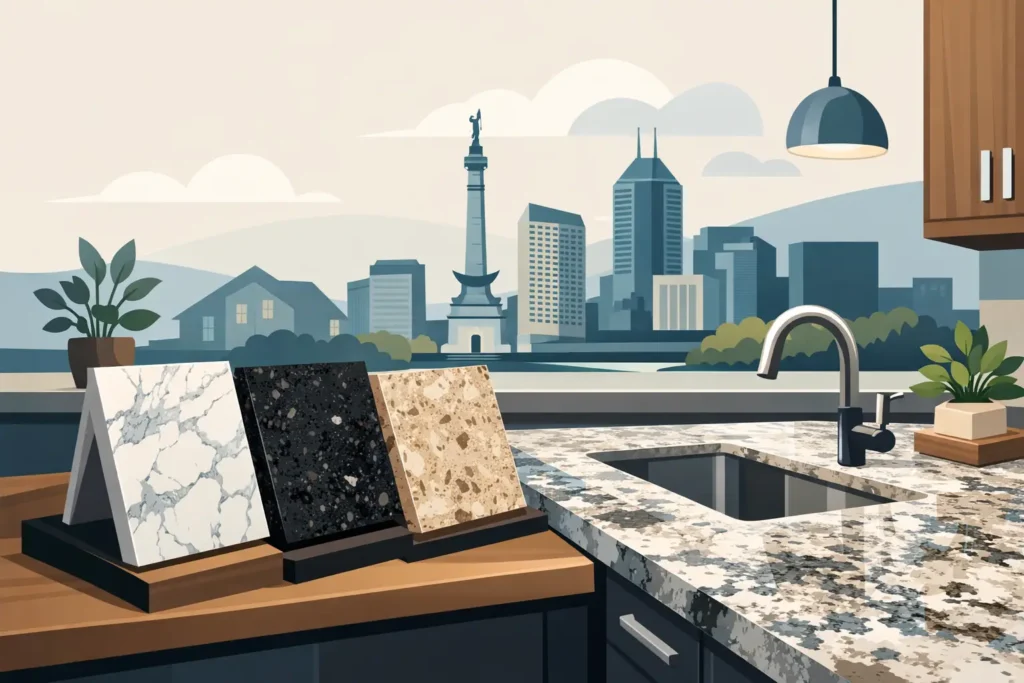
This is where buyers either get excited or overwhelmed. Small samples are useful for narrowing the field, but they do not tell the whole story. Granite has natural variation in veining, speckling, shade, and movement. The piece you love on a small display may look much busier or calmer across a full island.
That is why slab selection matters. Seeing the actual stone helps you spot features you want centered or avoided, especially around sink areas and large cut pieces. It also helps you understand whether the slab works with your cabinet color, flooring, wall paint, and lighting. Under warehouse lights, a stone can look one way. In a west-facing kitchen at 6 p.m., it may feel completely different.
If you are torn between two colors, ask yourself a simple question: do you want the countertops to lead the room or support it? A bold granite with heavy movement becomes a focal point. A more uniform pattern gives you flexibility with paint, backsplash, and hardware later.
Light granite vs dark granite
There is no universal best choice, but there are trade-offs.
Light granite can make a kitchen feel bigger and brighter. It often works well in smaller Indianapolis-area homes where the kitchen needs a visual lift. It also tends to pair easily with white, gray, navy, or natural wood cabinets. The trade-off is that some lighter stones can show spills sooner if sealing and cleanup are ignored.
Dark granite brings contrast and can look rich and clean, especially with light cabinets. It is a strong option for traditional kitchens, offices, bars, and many commercial spaces. The trade-off is that dust, hard water spots, and fingerprints may be more noticeable on some polished dark surfaces.
Finish, edge, and backsplash choices matter more than people think
Most buyers focus on color first, which makes sense, but the finish and fabrication details shape the final look just as much. A polished finish is still the most common because it gives granite that classic shine and brings out color well. Honed granite has a softer, more matte look, but it can show marks differently depending on the stone.
Edge profile is another small choice that changes the feel of the whole job. A simple eased edge looks clean and current. A more decorative edge can lean more traditional. Neither is better – it depends on the house and your taste. Just remember that more complex edges may add cost.
Backsplash is similar. A standard 4-inch piece can be practical and budget-friendly. A full-height tile or stone backsplash changes the style completely. If you know a wall upgrade is coming soon, think through how the countertop choice will work with that plan.
Seams, overhangs, and sink details
No granite countertop buying guide is complete without talking about the details people notice after installation. Seams are normal in many kitchens, especially on long runs or large islands. The goal is not pretending seams do not exist. The goal is smart placement and good fabrication so they are as clean and discreet as possible.
Overhangs also matter. If you want seating at an island or peninsula, make sure that is discussed upfront. Support requirements can change based on the depth of the overhang and the layout below.
Sink choice should happen early, not at the end. An undermount sink is common with granite because it looks cleaner and makes wipe-down easier. But sink size, bowl configuration, and accessories affect cutout planning. If you are replacing countertops and keeping existing plumbing locations, that should be part of the conversation from day one.
Don’t overlook sealing and maintenance
Granite is durable, but it is not maintenance-free. Natural stone needs periodic sealing depending on the material and use. Some granites are denser and lower maintenance than others. That is one reason blanket advice online can be misleading.
Day to day, granite is easy to live with. Wipe spills, use a mild cleaner, and avoid treating it like a cutting board just because it is hard. If you want a surface with a natural look and strong durability, granite does the job well. If you want something with almost no maintenance discussion at all, quartz may also be worth comparing. It depends on your priorities.
How to make the buying process easier
The smoothest projects usually follow a simple path: rough measurements, budget conversation, slab selection, final measure, fabrication, then installation. Problems usually show up when buyers are sent off to figure out everything themselves or get quotes that leave out half the work.
If you want the process to feel manageable, work with a company that helps you through stone selection, explains what is included, and keeps communication tight from estimate to install day. That saves time, and it cuts down on the back-and-forth that makes kitchen projects drag.
For homeowners around Indianapolis, Carmel, Fishers, Greenwood, Avon, and Westfield, that local guidance matters. Warehouse inventory changes. Fabrication schedules move. Install logistics can make or break the week. A company that knows the market and handles this every day can keep small issues from turning into expensive delays. That is a big part of how Granite Networks Indy keeps projects simpler for customers.
Red flags to watch for before you buy
If a quote feels unusually low, ask why. It may be fine, but it may also leave out tear-out, sink work, edges, or backsplash. If you are told to choose from tiny samples without seeing the slab, slow down. If communication is already hard before the deposit, do not expect it to improve during templating and installation.
Also be careful with unrealistic timelines. Good countertop work involves scheduling, field measurements, fabrication accuracy, and install coordination. Fast is great when it is organized. Fast and sloppy is expensive.
The best granite is the one that fits the job
That may sound obvious, but it is the truth. The best granite for a high-end custom kitchen is not always the best granite for a rental turnover. The best color in a bright open-concept home may not work in a smaller galley kitchen. The cheapest quote is not always the best value, and the most dramatic slab is not always the smartest pick.
A good buying decision comes down to fit: your budget, your layout, your style, and how much help you want through the process. When the quote is clear, the slab is selected with intention, and the install is handled right, granite is one of the easiest upgrades to feel good about every single day.
If you are getting ready to replace countertops, keep it simple. Focus on the actual slab, the real scope of work, and the team doing the measuring and installation. That is how you avoid wasted time, hidden costs, and a kitchen that looked better in the sample than it does in your house.