
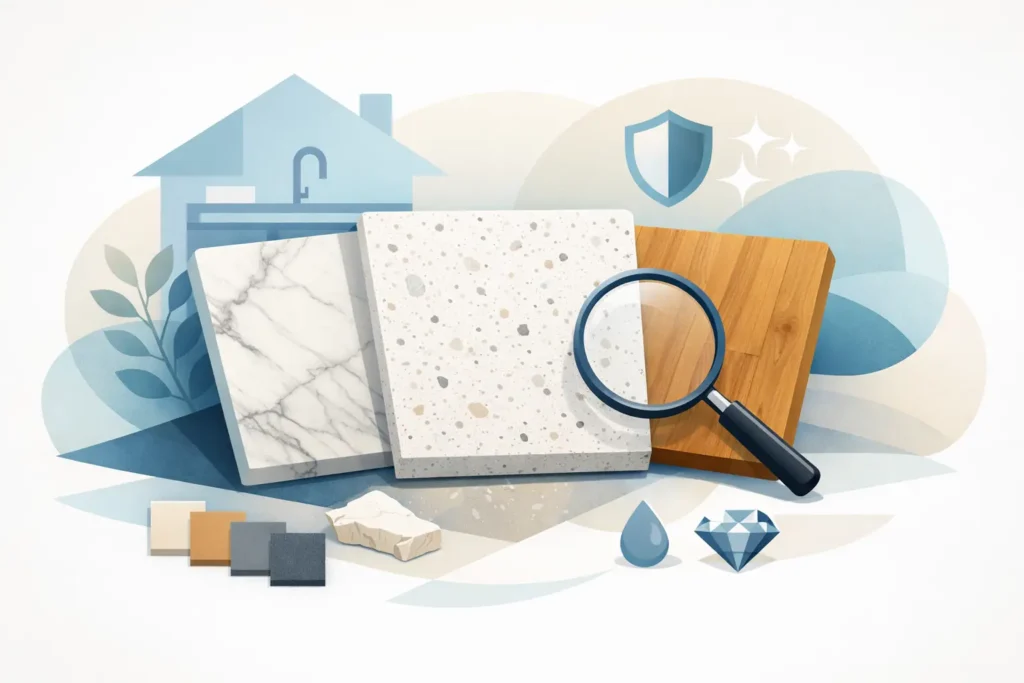
You can waste a lot of time comparing countertops if you start in the wrong place. Most people walk in thinking they need to pick a color first, but the real starting point is a best countertop materials comparison based on how you actually use the space, what you want to spend, and how much maintenance you are willing to deal with after install.
That is where a lot of kitchen projects go sideways. A countertop can look great in a photo and still be the wrong fit for a busy family kitchen in Fishers, a rental property in Greenwood, or a quick flip in Avon. The right choice is not just about appearance. It is about wear, staining, heat, edge damage, resale appeal, and whether the material matches the pace of your life.
Best countertop materials comparison by real-life use
If you want the short version, quartz and granite are the two materials most homeowners end up choosing for good reason. They hit the sweet spot on appearance, durability, and long-term value. But they are not interchangeable, and there are cases where marble, butcher block, or even laminate make sense.
Quartz is usually the easiest recommendation for homeowners who want low maintenance. Granite is a strong pick for people who want natural stone character and solid performance. Marble is beautiful but higher maintenance. Butcher block adds warmth but needs regular care. Laminate keeps costs down but does not compete the same way on longevity or resale.
The best material depends on whether your priority is convenience, price, luxury, or speed.
Quartz countertops
Quartz is one of the most requested options for kitchens right now, and that is not hype. It is a manufactured stone surface made from natural quartz particles and resin, which gives it a consistent look and strong everyday performance.
For a lot of homeowners, the biggest advantage is maintenance. Quartz does not need sealing, and it handles spills better than many natural stones. If you have kids making breakfast on the run, if you cook often, or if you just do not want another thing on your home maintenance list, quartz is hard to beat.
It also gives you more predictable color and pattern options. That matters when someone wants a clean white kitchen, a modern gray look, or a marble-style pattern without the upkeep of actual marble. If you are trying to coordinate cabinets, backsplash, flooring, and paint, consistency helps.
The trade-off is that quartz is not the answer for every situation. It is heat resistant, but not heatproof. You still should not drop a hot pan directly on it. It can also cost a little more depending on the color and brand. And if you are someone who loves the natural movement and one-of-a-kind variation of real stone, quartz can feel more controlled than organic.
Granite countertops
Granite stays popular because it earns its place. It is a natural stone, so every slab has its own pattern, movement, and color shifts. For many homeowners, that is exactly the point. Granite gives a kitchen personality in a way that engineered surfaces sometimes do not.
It is also a very durable surface. Granite handles heat well, stands up to everyday use, and can last for decades when properly cared for. In a busy kitchen, that matters. In a rental or resale property, it also carries strong name recognition. Buyers know what granite is, and they generally see it as an upgrade.
The main consideration is maintenance. Granite should be sealed to protect against staining, and some colors and stone types are more porous than others. That does not mean granite is difficult, but it is not maintenance-free. If you want a surface you can mostly forget about, quartz may feel easier.
This is where hands-on guidance matters. Two granite slabs can look similar at first glance and still perform a little differently. A local supplier who helps you view real slabs and understand what you are buying can save you from a lot of guesswork.
Marble countertops
Marble wins on looks. If someone wants a bright, classic, high-end kitchen, marble gets attention fast. It has soft veining, timeless appeal, and a luxury look that is tough to duplicate exactly.
But marble is also the material people regret when they buy it for the wrong reasons. It is softer and more porous than granite or quartz, which means it can etch, stain, and scratch more easily. Acidic foods like lemon juice and vinegar can leave marks. That is not a defect. That is just how marble behaves.
For some homeowners, that patina is part of the charm. For others, it becomes a constant annoyance. If you bake a lot, use your kitchen heavily, or want your tops to stay looking newer with less effort, marble usually is not the practical first choice. It works better when the goal is a specific look and the owner understands the maintenance going in.
Butcher block countertops
Butcher block brings warmth that stone does not. It can make a kitchen feel less cold and more lived-in, especially in farmhouse, cottage, or transitional designs. It is also often used for islands, accent sections, or prep areas instead of full kitchens.
Price can be appealing, depending on the wood species and layout. It is also repairable in ways some other surfaces are not. Light scratches can often be sanded out, which homeowners like.
Still, butcher block needs regular sealing or oiling, and it is more vulnerable to water damage, staining, and wear around sinks. In Indiana homes where kitchens see real traffic, that can become a maintenance issue fast. It looks great when cared for. It just asks more from the homeowner.
Laminate countertops
Laminate has improved over the years, and for budget-driven projects it still has a place. If you are updating a rental, finishing a low-cost remodel, or need a quick cosmetic improvement, laminate can do the job.
It is affordable, available in many colors, and easier on the front end of the budget. For flips and basic commercial spaces, that may be enough.
The issue is lifespan and perceived value. Laminate is more prone to scratching, chipping, and heat damage. It usually does not give the same resale impression as stone. So while it costs less upfront, it may not be the best long-term value if you plan to stay in the home or want a stronger finished look.
Best countertop materials comparison for cost and value
Price matters, but the lowest price is not always the best deal. A better question is what you get for the money.
Laminate is usually the lowest entry point. Butcher block can range from moderate to surprisingly expensive depending on material and installation. Granite and quartz both sit in the mid-to-upper range, though exact pricing varies a lot by color, thickness, edge profile, cutouts, and layout. Marble often trends higher, especially when you factor in long-term care.
For most homeowners, quartz and granite offer the best balance of cost and value. You get a surface that looks upgraded, performs well, and helps the space feel finished. If the project is a primary kitchen, that usually makes more sense than saving a little upfront and replacing sooner.
A lot of pricing confusion comes from the way some sellers handle slabs, upgrades, and add-ons. That is why clear square-foot pricing and straightforward quoting matter. Nobody likes getting excited about a material and then finding out the real number is much higher than expected.
How to choose the right countertop for your project
If you want the cleanest answer, match the material to the job.
For busy family kitchens, quartz is often the easiest win. For homeowners who want natural stone and unique movement, granite is a strong choice. For luxury looks where maintenance is not a dealbreaker, marble can work. For warm design accents, butcher block has a place. For tight budgets or basic upgrades, laminate still serves a purpose.
Also think about who is using the space. A homeowner planning to stay ten years should choose differently than an investor renovating a rental. A serious home cook has different priorities than someone who mainly wants a polished kitchen for resale photos.
This is also why an in-person selection process matters more than internet photos. Materials look different under warehouse lighting, natural light, and your actual cabinet color. The smartest move is to compare the real slabs or samples, ask direct questions about maintenance, and get pricing that makes sense before the install date is on the calendar.
At Granite Networks Indy, that is exactly the kind of process we believe in – simple, honest, and built to save people time.
If you are stuck between two materials, do not overcomplicate it. Start with how you live, what you want to spend, and how much upkeep you can realistically tolerate. The right countertop is the one that still feels like a good decision after the kitchen is back in full use.