
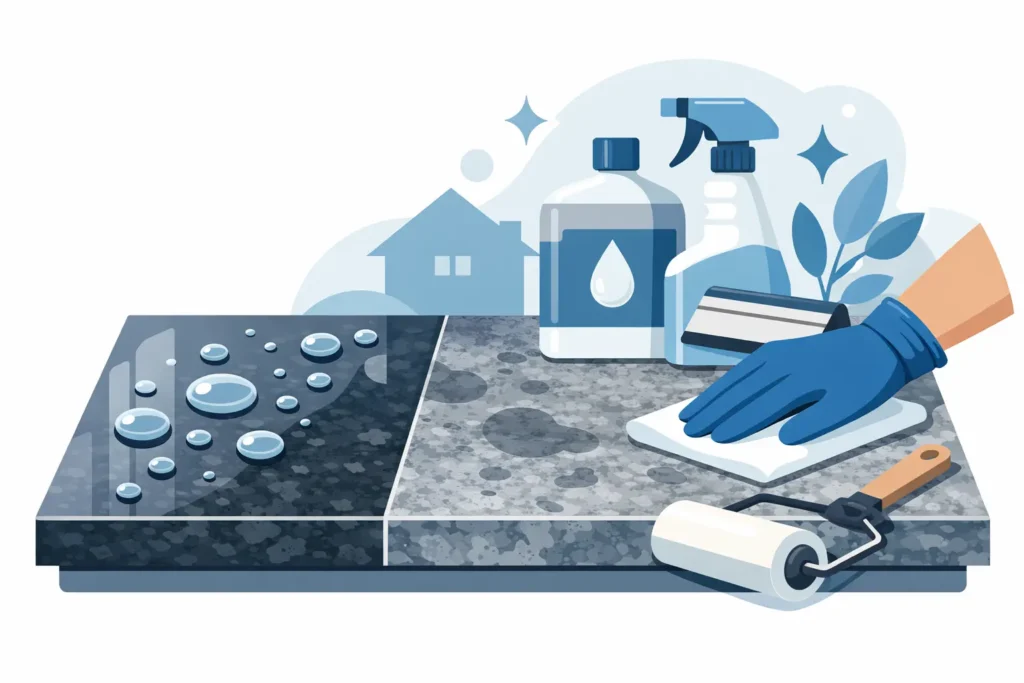
A granite countertop can look great for years, then start showing the little signs homeowners usually miss at first. Water darkens the area around the faucet. Oil leaves a shadow near the cooktop. The shine is still there, but the stone does not wipe clean like it used to. That is usually when a granite sealing and resealing service stops being an extra and starts being the smart next step.
Granite is durable, but it is still natural stone. Some slabs are dense and resist moisture better than others. Some lighter colors are more porous. Some kitchens get light use, while others take a daily beating from cooking, kids, and constant cleanup. That is why there is no one-size-fits-all answer for how often granite needs attention. What matters is how your specific tops are performing in your actual space.
What a granite sealing and resealing service actually does
A lot of people hear “sealing” and assume it means putting a shiny coating on top of the stone. That is not what a quality granite sealing and resealing service is about. The goal is to apply a penetrating sealer that soaks into the stone and helps slow down the absorption of water, oil, and other household messes.
That matters because granite is not invincible. It handles heat well. It stands up to daily wear. But if moisture and oils keep getting into unprotected pores, staining becomes much more likely. Once a deep stain sets in, removing it is harder, less predictable, and sometimes not fully possible.
A proper service usually starts with cleaning the surface correctly. That sounds basic, but it matters. If residues from household cleaners, grease, or old topical products are left behind, the sealer may not absorb evenly. From there, the stone is evaluated, the right sealer is chosen, and the product is applied based on the condition and porosity of the granite. After curing, the surface should be easier to maintain without changing the natural look you chose in the first place.
When granite needs resealing
The easiest answer is this: reseal granite when it starts absorbing liquid faster than it should. That may be every year in one kitchen and every few years in another. Anyone promising the exact same schedule for every home is oversimplifying it.
A common way to check is the water test. If a few drops of water sit on the surface for several minutes without darkening the stone, the sealer may still be doing its job. If the granite darkens quickly, especially around the sink or prep areas, it is probably time to reseal. You may also notice that cleaning takes more effort, small spills leave marks, or the countertop looks uneven in areas that get more traffic.
Indianapolis-area homes also deal with real-life conditions that affect timing. Busy family kitchens, rental property turnover, and homes where harsh cleaners get used regularly all put more stress on sealed stone. A bathroom vanity may go much longer between services than a kitchen island used for everything from meal prep to homework.
Signs homeowners should not ignore
If your granite darkens around water, grabs onto oil, or shows a dull, tired look in high-use spots, that is usually enough reason to have it checked. Etching is less common with granite than with marble, but residue buildup and wear can still leave surfaces looking off. The longer people wait, the more likely they are dealing with stain treatment instead of basic maintenance.
That is the difference between a simple service and a bigger headache. Resealing is preventive. Restoring neglected stone can take more time, more effort, and more money.
Why professional sealing makes more sense than guessing with store products
There are plenty of sealing products on the shelf, and some homeowners do fine using them. But there are also a lot of situations where DIY goes sideways. The wrong product gets used. Too much is applied. Excess sealer dries on the surface and leaves a hazy film. A dirty countertop gets sealed over instead of cleaned first. Then the homeowner thinks the granite is failing when the real issue is bad application.
Professional service is less about making this sound complicated and more about getting it right the first time. Natural stone varies. Installations vary. Past maintenance varies. A contractor who works with granite every day can tell whether the surface simply needs resealing or whether it has residue, staining, or wear that should be addressed first.
That saves time and guesswork. It also helps preserve the look of the stone instead of experimenting with products that may not be a fit for your countertop.
Granite sealing and resealing service for kitchens, baths, and rentals
Not every job comes from a high-end kitchen remodel. Sometimes it is a homeowner trying to protect a recent countertop investment. Sometimes it is a house flipper cleaning up a property before listing. Sometimes it is a landlord trying to get a rental ready between tenants without replacing tops that still have plenty of life left.
That is why service should be practical, not overcomplicated. In kitchens, the main concern is usually food prep, oils, water, and heavy daily use. In bathrooms, the issues tend to be moisture, soap residue, and cosmetics. In rentals or commercial breakrooms, the biggest factor is often inconsistent care. People use whatever cleaner is nearby and move on.
Each case calls for a straightforward evaluation. If the granite is structurally sound and still looks good overall, resealing can be one of the easiest ways to improve performance and extend the life of the surface.
New granite still needs a plan
One mistake people make is assuming new granite is fully protected forever because it was just installed. Some slabs are sealed before installation. Some need another application later based on use and stone type. Either way, sealing is not a lifetime treatment.
If you recently installed granite, having a maintenance plan matters just as much as choosing the right color and edge profile. It protects the investment and helps avoid that frustrating moment when a beautiful countertop starts showing avoidable stains.
What to expect from the service process
The best service experience is simple. The countertop is inspected, the condition of the stone is checked, and the surface is prepared correctly. If there are problem areas, those are pointed out before any sealer goes down. Then the right product is applied, allowed to penetrate, and finished according to the needs of the stone.
Good communication matters here. Homeowners should know what the service can do and what it cannot do. Sealing helps resist staining, but it does not make granite stain-proof. It also does not repair chips, cracks, or deep damage. If another issue is present, that should be addressed honestly instead of being glossed over.
That no-nonsense approach is what most customers want anyway. They are not looking for a long sales pitch. They want to know if their tops need attention, what the service includes, and whether it is worth doing now instead of later.
How resealing fits into long-term countertop care
Granite maintenance is not difficult, but consistency matters. Use a pH-balanced stone cleaner or mild soap when needed. Wipe spills instead of letting them sit. Do not rely on abrasive pads or harsh chemicals to force the surface clean. Those habits go a long way.
Still, everyday care only gets you so far. Sealer gradually wears down from use, cleaning, and time. Resealing is the maintenance step that keeps daily cleanup easier and helps the stone keep doing its job.
For many Indianapolis homeowners, that makes resealing a smart service to schedule before countertops start looking worn out. It is easier to protect stone than to try to reverse neglect. If you already spent the money to install granite, keeping it sealed is one of the simplest ways to make sure it keeps paying off.
At Granite Networks Indy LLC, this is part of the bigger idea behind good countertop service – keep things easy, keep pricing clear, and help people take care of the stone they already own without turning it into a project. If your granite has started absorbing water, holding onto stains, or just not cleaning up the way it used to, getting it checked now is usually the better move. A little maintenance at the right time can save you from a much bigger fix later, and your countertops will show the difference every day.
Pingback: Countertop Durability: Granite or Quartz? - Granite Networks Indy LLC