
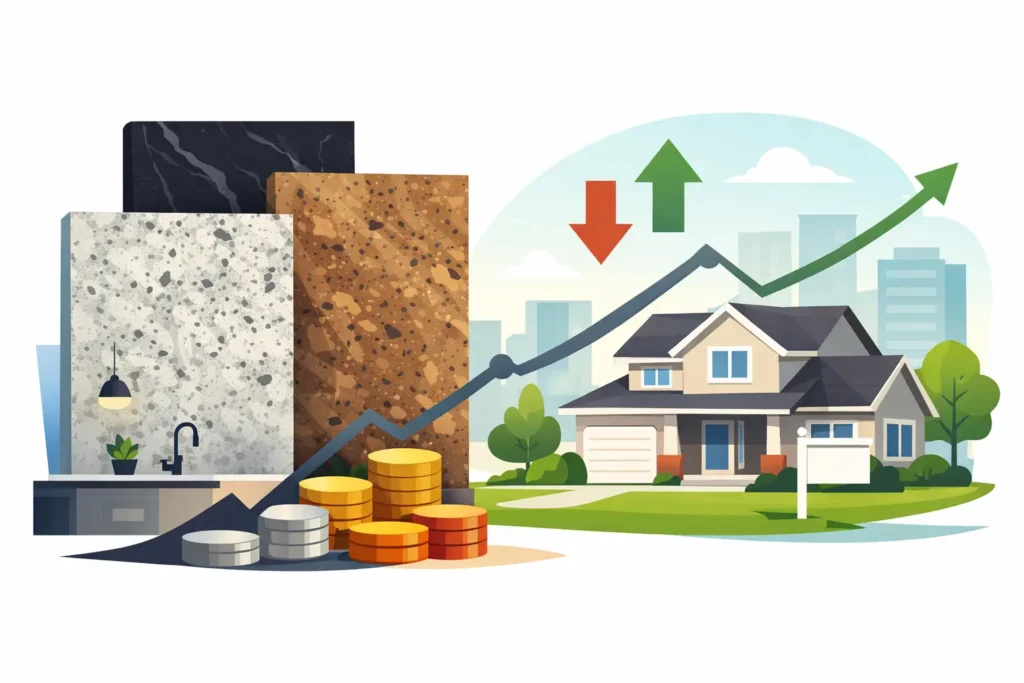
A countertop can make a kitchen look either freshly updated or stuck in another decade before a buyer even opens a cabinet. That is why granite colors resale value comes up so often with Indianapolis homeowners, flippers, and anyone planning a remodel before selling. The right stone will not guarantee a bigger offer on its own, but the wrong color or pattern can make a buyer start calculating replacement costs.
The good news is you do not have to choose the blandest possible countertop to protect your resale value. You just need a color that works with the home, photographs well, and gives the next owner room to make the space their own.
Granite Colors Resale Value Starts With Broad Appeal
For resale, the safest granite colors are usually light to medium neutrals with natural movement: whites, soft grays, warm beiges, creams, and balanced taupes. These colors work with more cabinet finishes, floor styles, and paint colors. They also help a kitchen feel brighter, which matters in older Indianapolis homes where windows may be smaller or layouts more closed off.
White and light granite remain popular because buyers often associate a light kitchen with a clean, current renovation. That does not mean every white slab is the same. A soft white granite with gray or warm flecks can feel flexible and natural. A slab with heavy burgundy, gold, or black veining may be beautiful, but it narrows the number of cabinets and backsplash choices that work beside it.
Medium-tone granite is another strong option, especially for busy family homes and investment properties. A balanced gray, beige, or greige stone can hide everyday crumbs and water spots better than a very bright white surface while still looking modern. It is often a smart middle ground for homeowners who want practical maintenance without a dark kitchen.
The key word is balance. Buyers generally respond well to stone that has character but does not take over the room.
Colors That Tend to Help a Kitchen Sell
A white, cream, light gray, or soft beige granite usually gives you the widest pool of potential buyers. These shades pair easily with white cabinets, wood cabinets, painted islands, stainless appliances, and common backsplash choices. They are also easier for listing photos. When a kitchen looks light and coordinated online, more people are willing to schedule a showing.
Gray granite can work particularly well in homes with cooler finishes, charcoal hardware, or white cabinetry. In Carmel, Fishers, and newer suburban developments, gray and white kitchens are still familiar to buyers. Just make sure the gray does not make already-dark cabinets or low lighting feel heavier.
Warmer granite can be the better choice in traditional homes. Cream, tan, and warm beige stones often fit honey oak, maple, cherry, and warm-toned flooring better than a stark white-and-gray countertop. Trying to force a cool modern slab into a warm traditional kitchen can make the update look pieced together instead of intentional.
Dark and Dramatic Granite: Worth It for Resale?
Black granite, deep brown granite, and dramatic high-contrast slabs are not automatically bad for resale. They simply require more care in the overall design. A polished black countertop can look sharp with crisp white cabinets, plenty of natural light, and clean hardware. In the right kitchen, it creates a high-end contrast buyers remember.
The trade-off is that dark granite can make a small kitchen feel smaller, especially when it is paired with dark cabinetry, a dark backsplash, or limited lighting. It can also show fingerprints, dust, and water marks more easily depending on the finish and pattern. A buyer who sees a dark, crowded kitchen may focus on what they would need to change instead of appreciating the quality of the stone.
Very busy granite deserves the same honest evaluation. Exotic movement, large color variation, and strong gold, red, green, or blue tones can be a great fit for a homeowner who plans to stay for years. For a resale-focused project, those looks are more of a gamble. They can date a kitchen quickly if the cabinets, backsplash, and wall colors are not designed around them.
If you love a bold slab, use it where it makes sense. A large island can handle more personality than a small galley kitchen. Keep surrounding finishes simple so the stone looks like a deliberate feature rather than one more competing pattern.
The Cabinet and Lighting Test Matters More Than Trends
There is no single granite color that raises the value of every home. The best choice depends on what is already in the kitchen and what buyers expect at that home’s price point.
Before picking a slab, look at cabinet color, flooring, wall paint, appliance finish, backsplash plans, and the amount of daylight in the room. A stone that looks perfect under warehouse lights can look completely different under warm kitchen bulbs or beside an existing floor. This is one reason viewing the actual slab matters. Small samples are useful, but they cannot show the full movement, color shifts, or veining you will see across a countertop.
For homes with white cabinets, a white or light gray granite with moderate movement is usually a reliable resale choice. With wood cabinets, look for undertones that connect rather than fight. Warm cabinets generally need warm flecks or creamy backgrounds. Cooler espresso cabinets can work with grays, whites, or black-and-white stones, provided the room has enough light.
Also consider how the kitchen will show in photos. Buyers scroll through listings fast. A countertop with a calm background, clean edges, and a coordinated backsplash reads as an updated kitchen in one glance. That first impression can matter more than whether the slab was the most unusual option in the warehouse.
Granite vs. Quartz for a Resale Project
Some buyers specifically ask for quartz because it has a consistent look and does not need sealing. Others still prefer natural granite because every slab is different and it offers real-stone character. Either material can support resale when the color, installation, and overall kitchen design are right.
Granite has an advantage for homeowners who want natural variation and strong value at different price points. It is durable, heat resistant, and can look excellent for years when it is properly cared for. It does require periodic resealing, but that is a manageable part of owning natural stone.
Quartz may make sense when a homeowner wants a very uniform white, marble-look veining, or minimal maintenance. But do not assume quartz is always the better financial move. A well-selected granite in a resale-friendly color can look just as polished and may fit the project budget better. Buyers are usually reacting to the finished kitchen, not checking a countertop label before deciding whether they like the home.
How to Choose Granite for a Home You May Sell Soon
If a sale is likely within the next few years, avoid designing only around your personal favorite color. You do not need to erase all personality, but you should make choices that feel easy for most buyers to live with.
Start with the condition of the cabinets. If they are dated, damaged, or heavily orange-toned, a new countertop alone may not solve the visual problem. Sometimes painting or refacing cabinets, changing hardware, and selecting a neutral granite creates a much stronger result than spending the entire budget on a more expensive slab.
Next, decide whether the kitchen needs to feel lighter, warmer, or more current. Let that goal guide the stone selection. A bright white granite can help open up a dark room. A warm neutral granite can make existing wood cabinets feel intentional. A medium gray can bring a transitional look to a rental or flip without showing every bit of daily wear.
Finally, buy the amount of stone your job actually needs and get a clear quote that includes the important details. Fabrication, edge choices, sink cutouts, removal, installation, and natural-stone sealing can all affect the real project cost. A low square-foot price is not a bargain if surprises appear later.
At Granite Networks Indy, we help customers view slabs at trusted local distribution centers, narrow down the colors that fit their kitchen, and keep the process straightforward from measurement through installation. You get help making a practical decision without spending weekends driving between showrooms.
A Better Question Than “What Color Is Most Valuable?”
The better question is: what granite color makes this specific kitchen feel finished, bright, and easy to own? Resale value is less about chasing one trendy shade and more about avoiding a design that limits the next buyer’s options.
Choose a slab with a neutral foundation, make sure it works with the fixed finishes in the room, and see the full stone before committing. If you are torn between two colors, the one that makes the kitchen feel larger, cleaner, and more coordinated is usually the safer bet. That is the kind of upgrade buyers notice without having to think twice about it.