
A granite countertop can look perfectly fine and still be ready for fresh sealer. That is why homeowners often ask, when should granite be resealed? The honest answer is not “every year” or “every five years.” It depends on the stone, the sealer used, and how your kitchen gets used.
A busy family kitchen in Carmel, a rental property in Greenwood, and a lightly used bathroom vanity in Fishers will not all need attention on the same schedule. The good news is that you do not have to guess. A quick water test and a little common sense will tell you far more than the calendar.
When Should Granite Be Resealed? Start With the Water Test
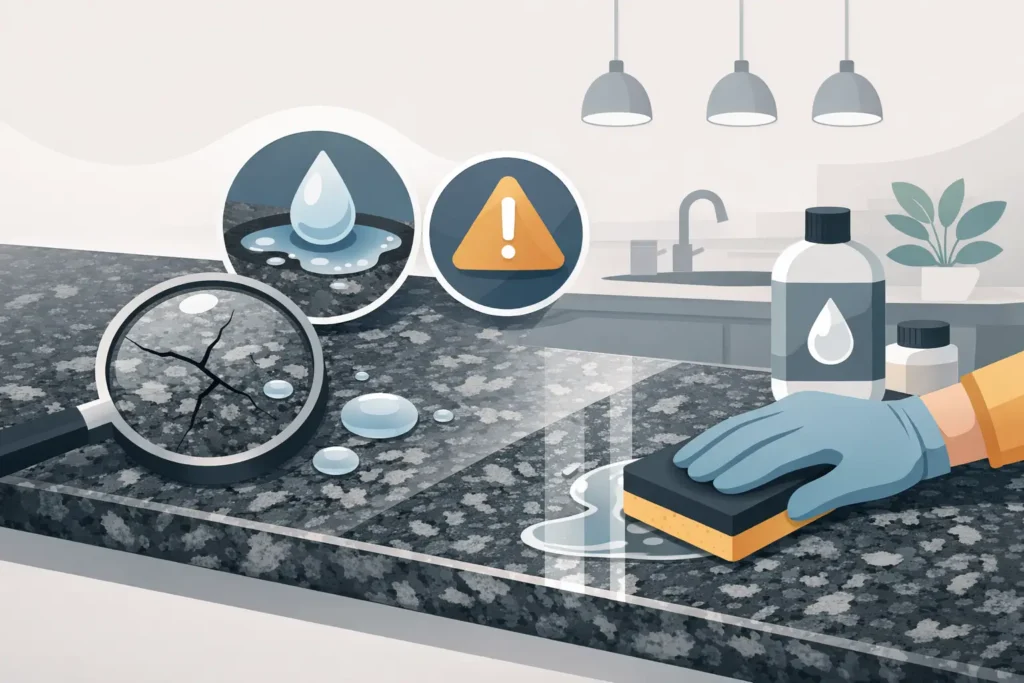
The easiest way to check your granite is the water test. Choose a clean, dry spot on the countertop, preferably near the sink or prep area where the stone sees regular use. Place a few drops of water on the surface and let them sit for about 15 to 20 minutes.
If the water stays beaded up and the granite does not darken, the existing sealer is still doing its job. Wipe it away and keep enjoying your countertop.
If the water soaks in, spreads, or leaves a darker spot that takes time to disappear, the stone is absorbing moisture. That is your signal that resealing is a good idea. The dark spot does not automatically mean the granite is damaged or stained. It simply means the protective barrier has worn down enough for moisture to enter the pores.
For an extra check, repeat the test with a small drop of cooking oil in an inconspicuous spot. Granite is especially vulnerable to oil-based staining once its sealer wears off. If oil darkens the surface quickly or leaves a mark after cleanup, schedule resealing sooner rather than later.
Granite Does Not Follow One Resealing Schedule
Many granite countertops need resealing every one to three years, but that is a guideline, not a rule. Some dense granite varieties can go much longer. Other natural stones are more porous and may need attention every year, especially in a hard-working kitchen.
The original sealer matters too. A quality professional-grade penetrating sealer usually lasts longer than a quick spray-on product from a big-box store. How it was applied makes a difference as well. If the surface was not thoroughly cleaned and dried before sealing, or if excess sealer was left on the stone, the result may not last as expected.
Daily habits play a big role. A countertop beside a frequently used sink gets exposed to water, dish soap, coffee, oil, lemon juice, and food prep. A kitchen used for large family meals, entertaining, or meal prep will naturally wear through protection faster than a countertop in a low-traffic guest bathroom.
Indianapolis-area homes also deal with seasonal changes in indoor humidity and plenty of muddy, salty winter traffic around entry areas and wet bars. None of that means granite is difficult to own. It just means a simple maintenance check is smarter than blindly applying sealer every January.
Signs Your Granite May Need Resealing
The water test is the best confirmation, but there are a few everyday signs worth noticing. Water may stop beading near the sink. A small splash of oil may darken the surface more than it used to. You may also see that spills seem to absorb quickly instead of sitting on top long enough to wipe away.
Pay attention to high-use zones rather than judging the entire countertop from one spot. The area around the faucet, dishwasher, coffee maker, or cooktop can lose protection first. It is common for one section to need resealing before the rest of the kitchen.
A dull appearance is not always a resealing issue. Granite has a natural finish, and residue from soaps, hard-water minerals, or the wrong cleaner can make it look hazy. Sealer protects against absorption. It does not polish the stone, remove etching, repair chips, or make a worn surface glossy. Cleaning the countertop correctly may solve the appearance problem without adding more sealer.
Do Not Reseal Granite Just Because a Year Passed
More sealer is not always better. Applying sealer over a countertop that is still protected can leave a streaky, tacky, or cloudy film. That is especially likely with topical products that sit on the surface instead of penetrating the stone.
This is one reason we recommend testing first. If water beads up, save yourself the mess and skip the resealing for now. If water absorbs, clean the stone with a granite-safe cleaner, let it dry completely, then use the right penetrating sealer for natural stone.
The countertop must be fully dry before sealing. Moisture trapped in the pores can interfere with the sealer and lead to uneven results. In a busy kitchen, that usually means planning ahead and keeping the surface dry for the recommended amount of time before and after application.
How to Keep Sealer Working Longer
Granite is durable, but it is not indestructible. The easiest way to stretch the time between resealing is to avoid harsh cleaning products. Bleach, ammonia, oven cleaner, abrasive powders, and acidic cleaners can wear down sealer and leave the surface looking rough or streaky.
Use a pH-neutral stone cleaner or a small amount of mild dish soap with warm water for everyday messes. Wipe spills up promptly, especially oil, wine, juice, tomato sauce, and coffee. Granite can handle normal kitchen life, but letting colored or oily liquids sit for hours creates an unnecessary risk once the sealer begins to weaken.
Use cutting boards and trivets too. Granite is hard enough to dull kitchen knives, and while it handles heat better than many countertop materials, a trivet is still a smart habit. The goal is not to baby your countertop. It is to protect a major investment with simple routines that take almost no time.
Resealing Is Different From Removing a Stain
If your countertop already has a dark spot, do not assume a new coat of sealer will make it disappear. Sealer helps prevent future absorption. It does not pull oil, rust, or other staining out of the stone.
Some stains can be treated with a stone-safe poultice, but the right approach depends on what caused the mark and how long it has been there. Aggressive DIY chemicals can make the situation worse, particularly on lighter granite or around seams and sink cutouts.
If the stone looks cloudy, has a rough patch, shows a deep stain, or has chipped edges, it is worth getting professional guidance before applying any product. A quick phone call can prevent a small maintenance issue from turning into a countertop repair project.
Should You Seal Granite Yourself or Call a Pro?
Many homeowners can reseal granite themselves when the countertop is in good shape and the water test clearly shows absorption. The job is straightforward when you use a quality penetrating sealer, follow the label directions, apply an even coat, and wipe off all excess before it dries on the surface.
Calling a professional makes more sense when you are unsure what type of stone you have, the countertop has existing stains, or a previous product left haze or streaks. It is also helpful after a major remodel, a sink replacement, or countertop repair work. Those are the moments when the seams, edges, and areas around cutouts deserve a closer look.
For landlords, flippers, and commercial property owners, professional resealing can be an easy way to protect countertops between tenants or before listing a property. It helps the stone look cared for and gives you a clear maintenance baseline for the next owner or occupant.
A Simple Check Beats a Complicated Schedule
Put a reminder on your calendar to do the water test once or twice a year, especially before the holiday cooking season or after a long stretch of heavy kitchen use. It takes less than 20 minutes, and it gives you a real answer instead of relying on a generic resealing schedule.
If the water beads, you are good. If it absorbs, take care of it before the next oil splash, red-wine spill, or busy weekend of cooking has a chance to leave a mark. And if you want a local team to look at the stone and handle the work without the hassle, Granite Networks Indy can help keep your natural stone countertops protected and looking their best.