
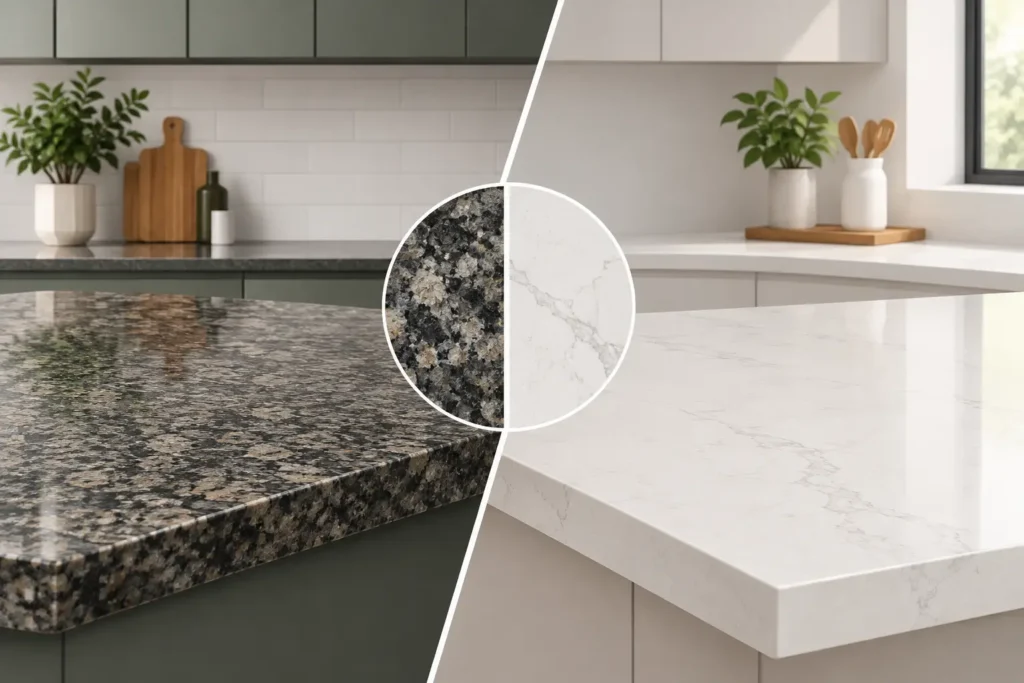
A countertop can look perfect on installation day and still be the wrong choice for the way you actually use your kitchen. Countertop durability is not just about whether a surface scratches. It is about hot pans, spilled coffee, dropped dishes, kids doing homework, heavy grocery bags, and whether you want another maintenance task on your calendar.
For Indianapolis homeowners, flippers, and remodelers, granite and quartz are both strong choices. The better option depends on your habits, budget, and expectations. Here is the straight answer on what holds up, what needs attention, and what can cause problems even with a high-quality stone.
What Countertop Durability Really Means
When people ask which countertop lasts longer, they are usually asking several questions at once. Will it scratch? Can it handle heat? Will it stain? Does it chip? Will it look dated or worn after a few years?
A durable countertop handles normal daily use without demanding constant worry. That does not mean it is indestructible. Granite and quartz are both premium surfaces, but each has a different weak spot. Knowing that before you select a color can save you from a frustrating surprise later.
Installation matters, too. A beautiful slab can still develop issues if cabinets are not level, seams are poorly placed, or the stone is not properly supported around a sink or overhang. Durable material needs careful fabrication and installation to do its job.
Granite Durability in a Real Kitchen
Granite is natural stone, which means every slab has its own movement, color, and mineral pattern. It is also exceptionally hard. Granite handles everyday cutting, serving, and food prep very well, although you should still use a cutting board to protect both the surface and your knives.
Heat is one of granite’s biggest advantages. A hot pan is less likely to damage granite than many other countertop materials. That makes it a practical fit for busy cooks, rental properties, and kitchens where someone is always setting down a baking sheet. Trivets are still a smart habit, especially near seams and edges, but granite gives you more forgiveness around heat.
The trade-off is porosity. Granite needs to be sealed to help resist moisture and stains. A properly sealed granite countertop is easy to live with, but sealing is not something to ignore forever. Depending on the stone, its finish, and how heavily the kitchen is used, it may need resealing periodically.
Granite can chip if a heavy pan or glass bottle strikes the edge just right. This is most common around sink cutouts, overhangs, and outside corners. The good news is that small edge chips can often be repaired. Choosing a slightly rounded edge profile instead of a sharp square edge can also reduce the chance of noticeable damage.
Best fit for granite
Granite is a strong choice if you want natural variation, solid heat resistance, and a surface that can take serious daily use. It works especially well for homeowners who do not mind basic maintenance and want each kitchen to have a one-of-a-kind look.
Quartz Durability for Busy Homes
Quartz countertops are engineered from natural quartz minerals and resins. They offer a consistent appearance, a wide range of colors, and a nonporous surface that does not require routine sealing. For many homeowners, that low-maintenance benefit is the deciding factor.
Quartz is highly resistant to stains from common kitchen spills. Coffee, wine, oil, juice, and everyday messes are generally easier to wipe up without fear that they will soak into the surface. That makes quartz a practical option for families, rental homes, office break rooms, and anyone who wants less upkeep.
Quartz also stands up well to normal scratches and wear. Still, it is not a chopping block. Repeated cutting directly on the countertop can dull knives and may eventually mark the finish. Use a cutting board and you will avoid a problem that is completely preventable.
Where quartz needs more caution is heat. The resins that help create its consistent, nonporous surface can be affected by extreme temperature changes. A hot skillet or roasting pan placed directly on quartz may leave discoloration, cracking, or a dull spot. Always use a trivet or hot pad. It takes two seconds and protects a much bigger investment.
Quartz can also chip at exposed edges if it takes a hard impact. No stone surface loves being hit with a cast-iron skillet. A good installer will review edge options, seam placement, and support needs so the finished countertop is built for how the space will be used.
Best fit for quartz
Quartz is a great match if you want predictable color, easy cleaning, and no sealing schedule. It is especially popular in active kitchens where spill resistance matters more than being able to set down a hot pan without thinking about it.
Granite vs. Quartz: Which Holds Up Better?
There is no honest one-word winner because the answer depends on what kind of damage concerns you most. Granite usually wins on heat resistance and natural hardness. Quartz usually wins on stain resistance and low-maintenance care.
If your kitchen sees lots of baking, cooking, and hot cookware, granite may give you more peace of mind. If your household has frequent spills, busy mornings, and little interest in resealing stone, quartz may be the easier fit.
For a house flipper or investment-property owner, the decision may come down to the buyer profile and the overall design. Quartz often gives a clean, current appearance with simple care instructions for future owners. Granite can create a high-end, natural-stone look while offering excellent performance at the right price point. The material is only part of the value. Choosing the right slab and paying for only the square footage you need matters, too.
The Installation Details That Affect Durability
Countertops do not fail only because of the material. Problems often start with what is underneath or how the stone was handled during fabrication and installation.
Cabinets must be structurally sound and reasonably level before stone goes on top. A weak cabinet box, shifting island, or large unaddressed low spot can put stress on the countertop. Sink cutouts need proper support, particularly with heavy farmhouse or cast-iron sinks. Overhangs for seating may require brackets or steel reinforcement, depending on their depth and the stone selected.
Seams deserve attention as well. Most larger kitchens require seams because slabs have size limits. A well-planned seam in a low-stress area is normal and should not be treated as a defect. The goal is to use matching material, keep the seam tight, and avoid placing it where it will receive repeated impact or support a heavy load.
This is where working with an experienced local team makes a difference. Granite Networks Indy helps customers measure the space, select material at partner warehouses, and coordinate fabrication around the actual layout instead of guessing from a sample in a showroom. That process helps prevent costly surprises before installation day.
Simple Habits That Keep Stone Looking New
You do not need a complicated cleaning routine to protect granite or quartz. Warm water, a soft cloth, and a mild stone-safe cleaner will handle most daily messes. Avoid abrasive scrub pads and harsh chemicals, especially products with strong acids or high alkaline content. They can dull the finish, affect sealers, or leave residue behind.
For granite, clean spills promptly and keep up with resealing when water no longer beads on the surface. For quartz, focus on heat protection and avoid using aggressive cleaners for routine cleanup.
A few habits make the biggest difference:
- Use cutting boards instead of cutting directly on the stone.
- Put hot cookware on trivets or hot pads, particularly on quartz.
- Do not stand or sit on countertop overhangs.
- Wipe up oil, wine, citrus, and colored spills rather than letting them sit.
- Avoid slamming heavy cookware onto edges and around the sink.
These are small steps, but they protect the areas where countertop damage most often starts.
Choose for Your Life, Not Just the Sample
A small sample can tell you whether you like a color. It cannot tell you how the surface will feel after three years of family dinners, holiday cooking, tenant turnover, or daily coffee spills. Ask how you use the room, how much maintenance you want, and where your biggest risks are likely to be.
The most durable countertop is the one that fits your real routine and is installed correctly from the start. Pick the surface you will feel comfortable using every day, then give it the basic care it deserves. That is how a kitchen upgrade keeps looking like an upgrade long after the dust from the remodel is gone.