
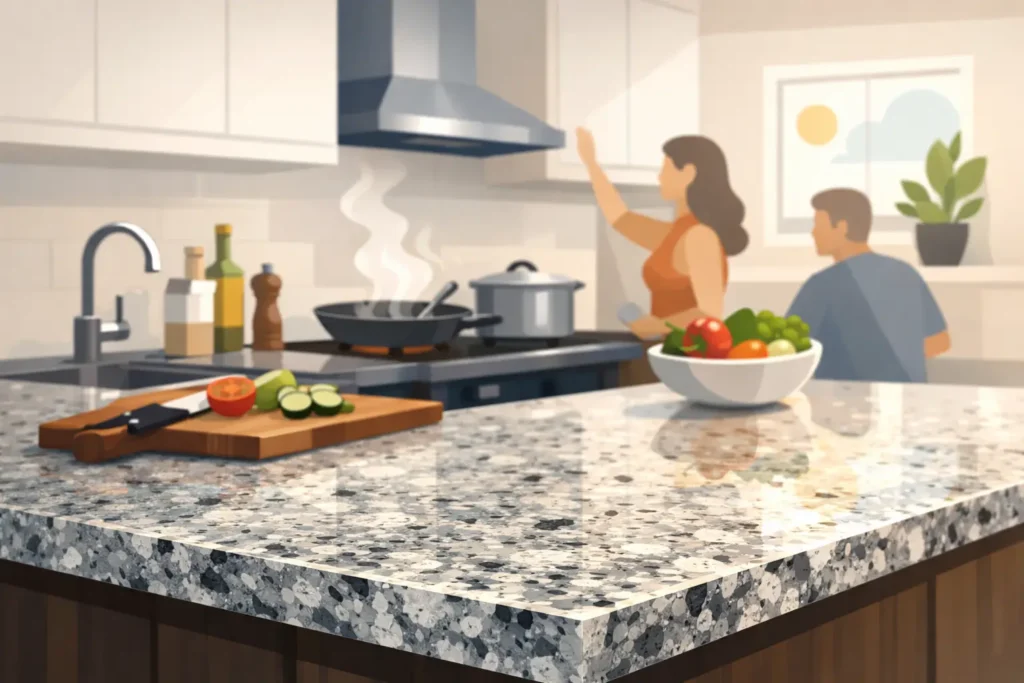
A kitchen that sees real life needs more than a pretty countertop. It needs a surface that can handle grocery bags sliding across it, coffee spills before work, kids making snacks, hot pans, and the occasional dropped glass. The best granite for busy kitchens is usually not the flashiest slab in the warehouse. It is the one with the right combination of density, movement, color, finish, and maintenance expectations for how you actually use the room.
That is why choosing granite should not be a quick decision made from a small sample in a showroom. Every natural stone slab has its own pattern and personality. Seeing the full slab, understanding how it will perform, and getting straightforward guidance makes the whole project easier.
What Makes Granite Work in a High-Traffic Kitchen?
Granite is a natural stone, which means it brings real durability to a kitchen without looking manufactured. Properly selected and maintained granite stands up very well to everyday cooking, normal heat exposure, and regular cleaning. It is also less likely to show minor wear than many softer natural stones.
Still, “granite” is not one single product with identical performance from color to color. Some slabs are denser and less absorbent than others. Some have a calm, consistent look, while others have heavy veining, mineral flecks, or dramatic movement. For a busy household, those details matter.
The most practical granite typically has three things going for it: a durable, well-sealed surface; enough natural variation to hide crumbs and small smudges; and a color that works with your cabinets and flooring without making the room feel darker than you expected. A good fabricator and installer can help you evaluate the actual slab, not just the stone name on a tag.
Best Granite Colors for Busy Kitchens
There is no single “best” color for every Indianapolis kitchen. A family cooking dinner every night has different needs than a flipper updating a rental or a homeowner creating a bright, low-maintenance entertaining space. But a few color families consistently make daily cleanup feel less demanding.
Medium-Tone Granite With Natural Movement
For many active kitchens, medium-tone granite is the sweet spot. Gray, brown, taupe, and black-and-gray blends do a better job hiding everyday crumbs, water spots, and light dust than solid white or solid black surfaces.
Look for granite with flecks, speckling, or gentle movement rather than a perfectly uniform field of color. Stones in the Steel Gray, Tan Brown, Santa Cecilia, New Venetian Gold, and similar families are popular because they bring enough pattern to be forgiving without taking over the whole kitchen. The exact material available will vary by distributor, so the slab itself should always make the final call.
Dark Granite for Kitchens That Need Contrast
Dark granite can look sharp against white, light gray, or natural wood cabinets. It can also be very practical when it has a textured pattern or mixed mineral colors. Ubatuba-style greens and blacks, Black Pearl, and patterned charcoal granites are often good candidates for hardworking kitchens.
The trade-off is that a very dark, polished countertop can show fingerprints, dried water spots, flour, and dust more than homeowners expect. If you love the darker look, choose a slab with visible movement instead of a flat, solid black appearance. A leathered finish can also reduce the visual impact of smudges, though it has its own cleaning considerations.
Light Granite Without the High-Maintenance Look
White and cream kitchens remain a favorite around Carmel, Fishers, Greenwood, Avon, and Westfield. Light granite can absolutely work in a busy kitchen, especially when the slab has gray, beige, gold, or charcoal veining that breaks up the surface.
The key is avoiding the assumption that every light stone will behave the same way. Some light-colored granites are denser and very manageable once sealed properly. Others can be more prone to showing oils or dark liquids if spills sit too long. If your kitchen is a nonstop coffee, red sauce, and craft-project zone, select the individual slab carefully and ask direct questions about sealing and care.
The Best Granite for Busy Kitchens Is Not Always the Darkest
A common misconception is that dark granite automatically hides everything. In reality, countertop maintenance is more about contrast than color alone. A solid dark polished surface may reveal pale crumbs and streaks. A solid bright white surface may reveal dark crumbs, coffee rings, and tomato sauce.
Granite with a medium base color and natural variation is often the most forgiving choice. That could mean a gray stone with black and white flecks, a warm beige granite with brown and gold minerals, or a charcoal slab with lighter movement. The pattern gives your eye somewhere else to go besides the one small spot that needs wiping.
This is also where full-slab viewing matters. A small sample can make a stone look calm, but the full slab may have bold veins or color changes that affect where seams, sink cutouts, and backsplash lines will land. We take the hassle out of this part by helping customers view and choose slabs at preferred local distribution centers instead of asking them to guess from a sample board.
Finish Matters More Than Most People Think
Polished granite is still the standard choice for a reason. It reflects light, is easy to wipe down, and gives kitchens a clean finished look. For many homes, polished granite is the simplest option.
A leathered finish has a soft texture and lower sheen. It can be a strong choice for homeowners who want a more relaxed look and less obvious fingerprinting. However, the texture can hold onto residue if it is not cleaned regularly, especially around the cooktop. It is not difficult to maintain, but it needs a little more attention than a smooth polished surface.
Honed granite has a matte appearance that some homeowners love, particularly in modern or farmhouse-style kitchens. The trade-off is that honed surfaces can show oils or marks more easily depending on the stone. If low-effort care is your top priority, polished is generally the safer starting point.
Sealing Is Part of Owning Natural Stone
Granite is durable, but it is natural stone, not a zero-maintenance synthetic material. A quality sealer helps protect the surface from absorbing liquids and makes normal cleanup easier. How often granite needs resealing depends on the specific stone, the original sealer, and how heavily the kitchen is used.
You do not need to panic over every splash. The practical rule is simple: wipe up oil, wine, juice, coffee, and acidic foods in a reasonable amount of time. Use a stone-safe cleaner or mild soap and water, then dry the surface instead of leaving puddles around the sink.
Avoid harsh acidic cleaners, abrasive powders, and chemical products that can weaken the sealer or dull the finish. If water stops beading on the countertop or a darker spot appears after liquid sits briefly, it may be time to reseal. Granite Networks Indy can also help with natural-stone resealing when your counters need attention.
Do Not Choose by Name Alone
Stone names are helpful for narrowing options, but they are not a guarantee of color, pattern, or performance. “Santa Cecilia” from one lot may look noticeably different from another. The same goes for many black, gray, and white granite families.
When you view slabs, look at them under good lighting and think about your actual kitchen. Bring cabinet-door samples, flooring samples, backsplash ideas, and even a paint swatch if you have one. Check whether the slab has large fissures, dramatic color changes, or sections you would rather keep away from the sink or cooktop. Natural features are part of granite, but placement matters.
Ask about the layout before fabrication. A well-planned countertop uses the prettiest areas where they will be seen, places seams thoughtfully, and avoids putting a major vein break directly where it will bother you every morning. This is especially important on islands, where the countertop becomes a major visual feature.
Granite or Quartz for a Busy Kitchen?
Granite is a great fit for busy kitchens, but quartz deserves an honest mention. Quartz is engineered and does not require the same periodic sealing as granite. It offers consistent colors and patterns, which can simplify selection for a rental, flip, or highly coordinated kitchen design.
Granite wins homeowners over when they want a one-of-a-kind natural look, strong heat resistance, and visible depth that cannot be copied exactly. Quartz may be the better pick if you want the lowest possible maintenance and a more uniform appearance. Granite may be the better pick if you want character and do not mind simple natural-stone care.
The right answer depends on your budget, the look you want, and how you use the kitchen. A good countertop decision should feel clear, not pressured.
Before you settle on a color, picture a normal Tuesday night in your kitchen, not a staged photo. Choose the granite that fits that life, then let the right measurements, slab layout, fabrication, and installation do the rest.