
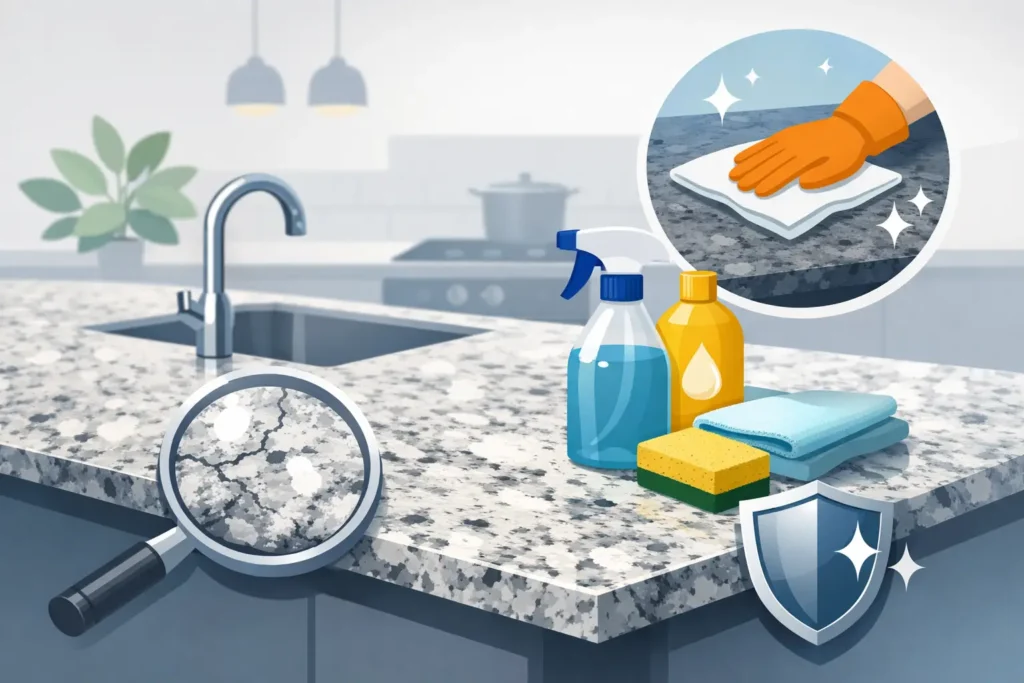
A granite countertop should make your kitchen easier to live with, not give you another thing to worry about. This granite countertop maintenance guide breaks down what actually matters: quick cleanup, the right cleaner, occasional sealing, and knowing when a spot needs professional attention. Granite is tough, but it is still natural stone. Treat it right, and it can look great through years of family dinners, rental turnovers, and busy mornings.
Start With the Right Expectations for Granite
Granite is one of the most durable countertop materials available. It handles daily use well, resists heat better than many manufactured surfaces, and brings natural color and movement that no two slabs can exactly duplicate. That said, “durable” does not mean “maintenance-free.”
Most granite countertops have small pores in the stone. A quality sealer helps fill and protect those pores, making it harder for liquids to soak in. It does not create an indestructible plastic coating on top of the granite. If red wine, cooking oil, coffee, or acidic juice sits on the counter long enough, it may leave a mark, especially if the sealer is wearing thin.
The amount of maintenance depends on the specific stone, its finish, and how the kitchen is used. A light, dense granite in a low-traffic bathroom may need very little attention. A darker or more porous stone near a busy cooktop, sink, or coffee station may need more regular care. That is normal, and it is manageable.
Daily Cleaning Is Simple
For routine cleaning, use a soft microfiber cloth or non-abrasive sponge with warm water and a small amount of mild dish soap. Wipe the surface, then go back over it with clean water so soap residue does not build up. Drying the countertop with a clean towel is a good habit, especially around the sink, because it prevents water spots and keeps the surface looking polished.
For a little extra disinfecting after raw meat prep or a messy cooking project, choose a cleaner specifically labeled safe for natural stone. Follow the directions on the bottle instead of soaking the countertop. More product is not better.
You do not need expensive products for every wipe-down. Consistent, gentle cleaning beats a cabinet full of harsh cleaners. The biggest mistake we see is homeowners using whatever is under the sink without checking whether it is safe for stone.
Cleaners to keep off granite
Avoid acidic or abrasive products. Vinegar, lemon juice, bathroom cleaners, grout cleaners, bleach-heavy sprays, and many all-purpose cleaners can dull the finish or weaken the sealer over time. Powdered scrubbers and rough scouring pads can scratch the surface or leave the polish looking hazy.
Also skip oil-based furniture polish and wax products. They can leave a streaky film that attracts dust and makes a granite countertop look cloudy. If your stone looks dull, adding a shiny coating is rarely the right fix. It is better to identify whether the issue is residue, a worn sealer, or damage to the finish.
Wipe Spills Before They Become Stains
Granite does not require panic every time something spills, but speed helps. Blot spills with a paper towel or soft cloth rather than aggressively rubbing them across the counter. Then clean the area with water and mild soap or a stone-safe cleaner.
Pay close attention to oil, wine, juice, tomato sauce, coffee, tea, and colored sports drinks. These are common culprits because they either carry pigment, contain acid, or can soak into unsealed areas. Cooking oils deserve special attention because they can darken granite without looking dramatic at first.
Use coasters under drinks that sweat and place trays under bottles of olive oil, hand soap, or cleaning products near the sink. These small habits are not about babying your countertop. They simply prevent the few repetitive messes that cause most avoidable marks.
Do Not Use Granite as a Cutting Board or Trivet Station
Granite is hard, but knives can still scratch or dull against it. Always use a cutting board for food prep. It protects your blades and keeps raw-food cleanup more sanitary.
Heat is a little more nuanced. Granite generally tolerates heat well, and a warm plate or pan is not usually a problem. But setting a scorching-hot cast iron skillet or roasting pan directly on the surface is an unnecessary gamble. Sudden temperature changes can stress natural stone, and countertop seams, caulk, and nearby areas may not respond the same way as the granite itself.
Use trivets or hot pads for cookware straight from the oven or burner. This is especially smart around seams, overhangs, and areas near an undermount sink. It takes two seconds and removes the question entirely.
Granite Countertop Maintenance Guide: When to Seal
Sealing is the maintenance item people hear about most, and it is also the one that gets oversold. Granite does not always need to be resealed on a fixed annual schedule. Some stones may need attention every year or two, while others can go much longer. What matters is whether the stone is still repelling moisture.
A simple water test can give you a clue. Put a few drops of water on a clean, dry area of the countertop and leave them for about 15 minutes. If the water stays beaded on the surface and does not darken the stone, the protection is likely doing its job. If the granite quickly darkens or absorbs the water, it may be time to reseal.
Test a few different places, particularly around the sink, cooktop, and areas where you prep food. One section may see more wear than another. Do not rely only on the appearance of the stone because granite can still look beautiful while becoming more absorbent.
What resealing involves
A quality stone sealer is applied to a clean, completely dry surface, allowed to sit for the manufacturer’s recommended time, and then thoroughly wiped away. Leaving excess sealer on the countertop can create a sticky or hazy residue, so follow the directions closely.
For a homeowner with a small, straightforward kitchen, resealing can be a reasonable DIY task. But if you are unsure which product fits your stone, dealing with stubborn buildup, or seeing dark spots that will not lift, call a stone professional. Granite Networks Indy also provides natural-stone resealing service for homeowners who would rather have the job handled correctly without guessing at products or timing.
Handle Stains Carefully Instead of Scrubbing Harder
A dark spot does not automatically mean permanent damage. First, figure out what likely caused it. Oil-based stains often look darker than the surrounding stone. Organic stains from food, coffee, or leaves may look brownish. A cloudy white area may be cleaner residue or mineral buildup rather than a stain inside the stone.
Do not attack a suspected stain with abrasive pads, strong acids, or random internet remedies. Hard scrubbing can make the finish uneven and turn one small problem into a more visible repair. Start by cleaning gently with a stone-safe cleaner and letting the area dry completely. Sometimes moisture trapped around a sink edge or seam needs time to evaporate.
If the mark remains, a professional can help determine whether it needs a stone poultice, deeper cleaning, resealing, or repair. This is particularly worth doing before listing a home, turning over a rental, or finishing a kitchen remodel. A clean, even countertop makes the whole room feel more finished.
Protect the Areas That Work Hardest
The sink area needs the most attention in many kitchens. Dry standing water around the faucet, soap dispenser, and sink rim when you can. Check occasionally for failing caulk, loose sink hardware, or moisture under the countertop. Those are installation and maintenance issues worth catching early.
Also keep an eye on countertop seams. A seam should not become a dumping ground for food residue or standing liquid. Clean it gently and avoid putting heavy weight on unsupported overhangs, especially if kids tend to climb onto the counter or guests lean on a breakfast bar.
For landlords and flippers, leave simple care instructions for tenants or buyers. A quick note about stone-safe cleaners, cutting boards, and spill cleanup can prevent a costly call later. Granite is a strong selling feature, and a little guidance helps it stay that way.
Know When to Call for Help
Contact a countertop professional if you notice a crack, a separated seam, a loose undermount sink, recurring darkening around the sink, deep chips, or a finish that stays cloudy after proper cleaning. These are not always major repairs, but waiting can allow moisture or movement to make the issue worse.
Good granite care is not complicated. Clean gently, wipe up spills, protect the busiest areas, and reseal based on how your particular stone performs. If your countertop needs a refresh or you are not sure what you are looking at, getting a straightforward answer early is usually the easiest way to keep a small issue small.