
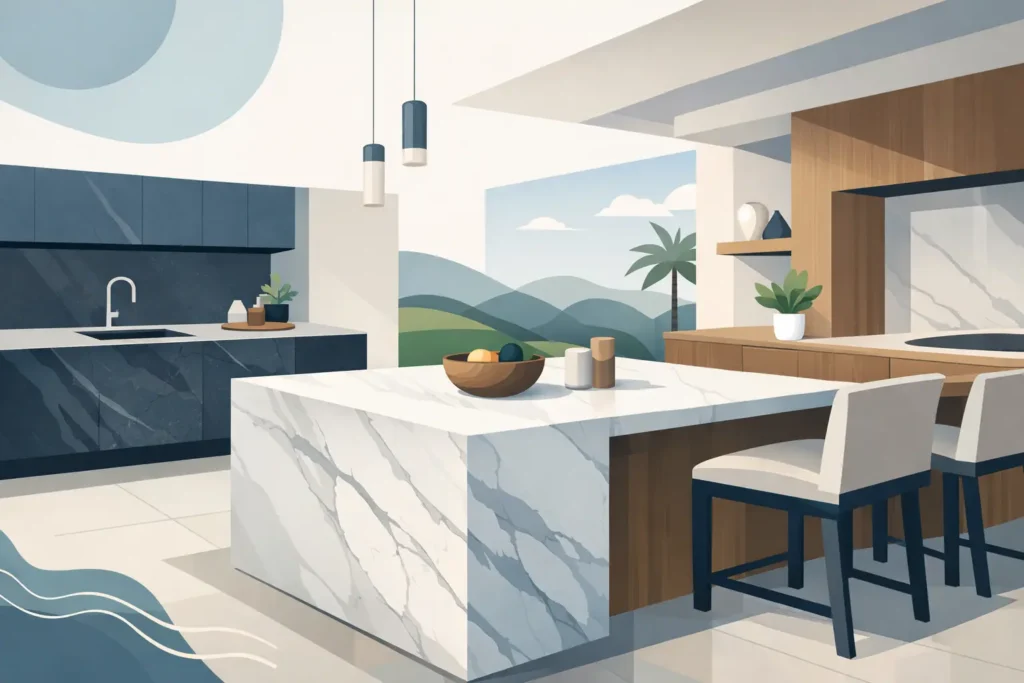
A waterfall edge can make a basic kitchen island look like a custom-built centerpiece. That is why waterfall countertop design trends continue to show up in Indianapolis remodels, from Carmel new builds to Fishers kitchen updates and fast-moving investment properties. The best versions are not just about following a photo trend. They use the right stone, the right layout, and enough practical planning to hold up to real life.
A waterfall countertop is simply a stone surface that runs across the top of an island or cabinet run and continues vertically down one or both ends. Instead of stopping at the edge, the material wraps the side like a sheet of stone flowing to the floor. It is clean, modern, and a great way to show off a beautiful quartz pattern or dramatic granite slab.
Waterfall Countertop Design Trends Homeowners Are Choosing
The biggest trend is not one specific color. It is intentionality. Homeowners are choosing surfaces that feel bold enough to make the island special but practical enough that the kitchen does not look dated in three years.
Warm white quartz is replacing stark, icy looks
Bright white quartz is still popular, but the look is shifting warmer. Think soft white backgrounds, light taupe movement, warm gray veining, and creamy marble-inspired patterns. These colors work especially well with natural oak cabinets, warm-painted cabinetry, brushed brass, and matte black hardware.
A warm white waterfall island can brighten a kitchen without making it feel sterile. It also gives homeowners flexibility if they decide to update wall color, lighting, or cabinet hardware later. For resale projects, this is usually a safer choice than a very specific or high-contrast pattern.
Bold veining is being used with more restraint
Dramatic veined quartz remains a strong option, particularly on large islands where the stone can be the main visual feature. The difference now is how it is being used. Rather than pairing busy counters with busy backsplash, homeowners are often keeping the surrounding materials quieter.
A waterfall edge is the right place for a bold slab because it puts more of the material on display. But slab layout matters. A fabricator needs to plan where the veins land on the countertop and where they continue down the side panel. If the pattern is not considered before cutting, the waterfall can look chopped up instead of intentional.
Vein matching is a premium detail worth discussing
Bookmatching and vein matching are becoming more requested, especially with marble-look quartz. With bookmatching, adjoining pieces mirror each other, creating a more symmetrical pattern. With vein matching, the fabricator aligns the movement as naturally as possible from the horizontal surface to the vertical leg.
This detail can look fantastic, but it depends on the slab pattern and how much material is available. Not every stone will give you a perfect continuous vein, and demanding a specific match can affect fabrication planning and cost. A good stone selection appointment should include a real conversation about what the finished edges can realistically look like.
Mitered edges create a thicker, custom appearance
Many waterfall islands use mitered edges. This means two pieces are cut at an angle and joined so the countertop appears thicker than the actual material. A standard 3 cm quartz can be made to look like a substantial 2-inch or 3-inch slab without needing an unusually thick stone.
This is one of the strongest waterfall countertop design trends because it adds a furniture-like look to an island. It works well in contemporary kitchens, but it also fits transitional homes when paired with warmer colors and simple cabinets. Just remember that a mitered edge is detailed fabrication work. The quality of the seam and alignment matters a lot.
Quartz Leads, but Granite Still Has a Place
Quartz is the most common choice for waterfall designs because its patterns are consistent, it does not require regular sealing, and it gives fabricators dependable material to work with around seams and miters. Marble-look quartz, soft concrete looks, and warm neutral patterns are especially popular.
Granite can also make a great waterfall countertop. It brings genuine variation, depth, and a one-of-a-kind appearance that manufactured material cannot fully copy. For homeowners who want natural stone, a quieter granite with flowing movement can look excellent on an island.
The trade-off is maintenance and pattern variation. Granite needs periodic resealing, and natural slabs vary widely from one section to another. That is part of the appeal, but it means you should see the actual slab before approving the layout. If you are using granite for a waterfall, do not select it from a tiny sample alone.
One Waterfall End or Two?
A two-sided waterfall island has the biggest visual impact. Both short ends run to the floor, framing the base cabinetry and making the island look finished from every angle. This option is popular in open-concept kitchens where the island is visible from the living room or entry.
One waterfall end is often the smarter call when the island is against a wall, near a traffic path, or working within a tighter budget. You still get the design feature, but you use less material and fabrication time. For many Indianapolis homeowners, one waterfall end creates the right balance between a custom look and a sensible project total.
It also depends on function. If one side of the island needs to stay open for stools, a dishwasher, cabinetry, or storage access, wrapping both ends may not make sense. Design should follow how the kitchen is used, not just what looks good in a showroom photo.
Make Room for Seating, Storage, and Daily Life
A waterfall panel does not replace good island planning. Before final measurements, think about where people will sit, where drawers and doors will open, and where the bar stools will go. A waterfall leg can make an island look more solid, but it can also reduce knee room if the seating overhang is not designed correctly.
For a family kitchen, you may want a larger seating overhang on one side and a waterfall panel only on the opposite end. For a rental or flip, a clean one-sided waterfall can create an upscale focal point while keeping the island layout simple and cost-conscious.
Also consider outlets. Most modern islands need electrical access, but homeowners do not always want a visible outlet breaking up a beautiful stone panel. There are ways to plan outlet placement more discreetly, but it needs to be discussed before fabrication and installation day.
Dark Islands Are Back, Just Not the Same Old Way
Black and charcoal surfaces are returning, especially in kitchens with light wood cabinetry, white perimeter counters, or warm metal finishes. The newer version is less about glossy black granite and more about charcoal quartz, deep green-black stone, soft matte finishes, and subtle movement.
A dark waterfall island can ground a large open kitchen and hide some of the everyday crumbs and scuffs that show immediately on plain white surfaces. On the other hand, dark polished material may show fingerprints, dust, and water spots more readily depending on the finish. If low-maintenance appearance is the goal, ask to see a larger sample under normal lighting before deciding.
What Actually Drives Waterfall Countertop Cost?
Waterfall edges cost more than a standard countertop because they require additional stone, more cutting, more finished edges, and more careful installation. The final number depends on the stone selected, island dimensions, whether one or two sides waterfall, thickness details, seam placement, and how complex the pattern matching needs to be.
This is where homeowners can get surprised if they only compare a basic square-foot price. The material is one part of the job. Fabrication details and installation access matter too. A large island piece may require extra handling, and a tight stairway or difficult entry can add complexity.
The good news is that you do not have to buy more stone than your project truly needs just because a slab is available in a warehouse. Granite Networks Indy helps customers select material at partner distribution centers, plan the project around the actual space, and understand the price before the work begins. That makes it easier to decide whether a waterfall edge belongs on one side, both sides, or not at all.
Choose the Trend That Fits Your House
The right waterfall island should look like it belongs in your kitchen, not like it was copied from someone else’s renovation. A large, dramatic quartz pattern may be perfect for a newer open-concept home in Westfield, while a warm white quartz with one clean waterfall end may better suit a compact Greenwood kitchen.
Bring cabinet samples, flooring photos, and inspiration pictures when selecting stone. Then look at full slabs in person. Lighting, undertones, and movement all read differently on a real slab than they do on a phone screen.
A waterfall edge is a worthwhile upgrade when it supports the rest of the kitchen and fits how you live. Start with the stone you genuinely like, plan the island around seating and storage, and let the finished detail do the talking.