
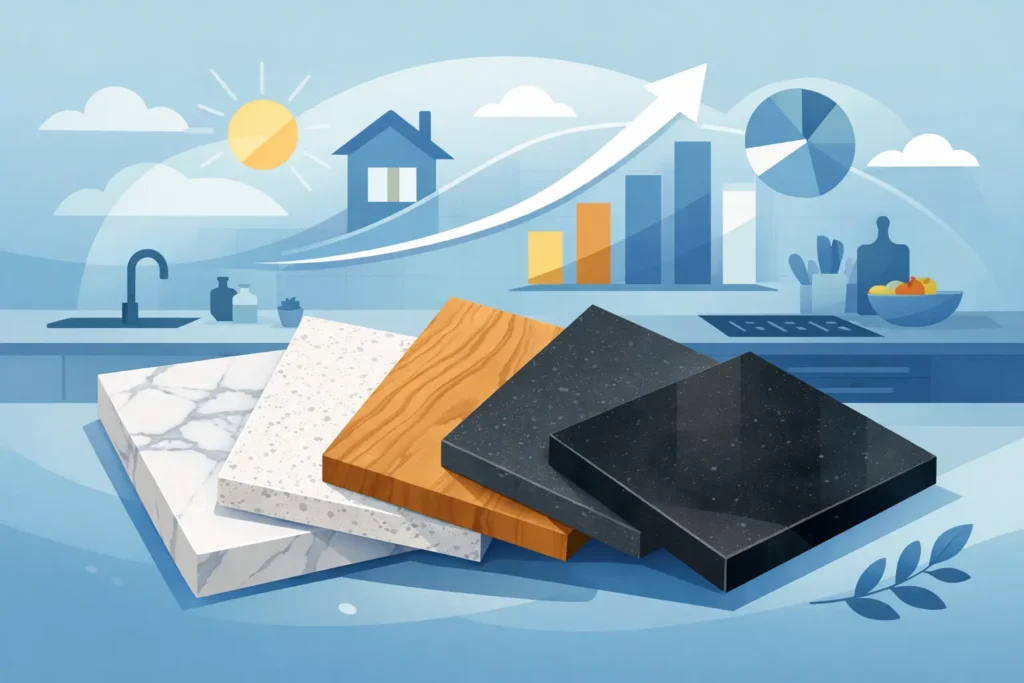
A kitchen countertop can look great for five minutes in a photo and still be the wrong choice for how you actually live. That is why picking the best countertops for kitchens is less about trends and more about what gets spilled, dropped, scrubbed, and used every single day. If you cook a lot, rent out properties, or just want a clean upgrade without wasting weeks comparing options, the right material makes a big difference.
Around Indianapolis, most people are balancing three things at once – price, appearance, and maintenance. They want something that looks sharp, holds up, and does not turn into a headache six months later. That is where the countertop conversation usually comes down to a few real contenders, and each one has clear strengths and trade-offs.
Best countertops for kitchens by material
If you want the short version, quartz and granite are the two materials most homeowners end up comparing for good reason. They cover the widest range of styles, they perform well in busy kitchens, and they add a finished, high-value look. But they are not automatically the right answer for every house, budget, or timeline.
Laminate, butcher block, solid surface, marble, and porcelain all have a place too. The key is matching the material to the job instead of chasing whatever looked good on a social post.
Quartz
Quartz is one of the most popular choices for a reason. It gives you a clean, consistent look, resists staining well, and does not require sealing. For a lot of homeowners, that low-maintenance factor is the entire selling point. You can wipe it down, keep moving, and not worry much about normal daily use.
It is especially strong for family kitchens, busy households, and rental or resale projects where you want something modern and dependable. Quartz also comes in a wide range of colors and patterns, including options that mimic marble without the same upkeep.
The trade-off is heat. Quartz is durable, but it is not the surface you want to treat like a landing pad for hot pans straight from the stove. It can also be less forgiving on price depending on the design you choose. Still, for many buyers, quartz lands right in the sweet spot between looks and practicality.
Granite
Granite remains one of the best countertops for kitchens if you want natural stone with real character. Every slab is different, which is a big part of the appeal. You are not getting a printed pattern. You are getting movement, variation, and a one-of-a-kind surface that can make a kitchen feel more custom.
Granite handles heat very well, and it holds up nicely in active kitchens. It is a strong fit for homeowners who cook often and want a natural material that feels solid and high-end. It also works across a lot of design styles, from traditional to more modern spaces depending on the color and movement in the slab.
The main thing to understand is maintenance. Granite does need sealing from time to time, especially compared with quartz. That does not make it difficult, but it does mean a little more care. For many people, that is a small trade for the look and durability they get in return.
Butcher block
Butcher block brings warmth that stone cannot match. If your kitchen feels cold or overly hard, wood countertops can soften the whole room fast. They work especially well in cottages, farmhouses, older homes, and kitchens where you want a more relaxed look.
The issue is upkeep. Wood can scratch, dent, stain, and dry out if it is not maintained properly. Some homeowners love that natural wear and see it as character. Others regret it as soon as the first water ring shows up near the sink. If you want a low-fuss surface, butcher block usually is not it.
Laminate
Laminate has come a long way, and it still earns a place in the conversation because budget matters. If you are updating a rental, flipping a house, or just need a decent-looking countertop without a major investment, laminate can do the job.
It is available in a lot of colors and styles, including looks that imitate stone. The downside is longevity. Laminate is more vulnerable to scratches, burns, and edge damage than stone surfaces. It can look good at install, but it usually does not offer the same long-term return or durability.
Marble
Marble is beautiful. Nobody argues with that. If your top priority is a bright, elegant kitchen and you are comfortable with a little wear, marble has a look that many other surfaces try to copy.
But for most working kitchens, marble is a high-maintenance choice. It etches, stains, and scratches more easily than quartz or granite. That makes it a better fit for lower-use spaces, baking stations, or homeowners who know exactly what they are signing up for.
Solid surface and porcelain
Solid surface countertops are easy to live with in some ways because they are nonporous and repairable. They can be a practical mid-range choice, though many people prefer the look and resale appeal of stone.
Porcelain is getting more attention too. It is sleek, heat-resistant, and strong, but installation can be more specialized, and availability may be narrower depending on the market. It is worth considering if you want a very modern finish, but it is not always the simplest route.
How to choose the best countertops for kitchens
The best choice depends on how the kitchen gets used. A family that cooks every night needs something different than an investor upgrading a property for resale. A homeowner who wants zero maintenance is making a different decision than someone who loves natural stone and does not mind periodic sealing.
Start with budget, but do not stop there. The cheaper countertop is not always the cheaper project long term if it wears out faster or hurts the overall look of the kitchen. At the same time, the most expensive option is not automatically the smartest one either.
Think about four questions. How much maintenance are you okay with? Do you want a natural look or a more consistent pattern? Is heat resistance a priority? And how long do you plan to live with this countertop?
If you want easy care and modern style, quartz is usually the front-runner. If you want natural stone and strong heat resistance, granite is tough to beat. If you are working with a tight budget, laminate may make sense. If your style leans warm and rustic, butcher block can be a good accent or full-surface choice if you accept the upkeep.
What most Indianapolis homeowners actually choose
In real projects, the decision usually narrows fast. Most homeowners in Indianapolis, Carmel, Fishers, Greenwood, Avon, and Westfield are not choosing between seven materials forever. They are usually comparing quartz and granite because those options give the best mix of durability, visual impact, and value.
That is also where shopping can get confusing. A lot of people assume they need to wander showroom to showroom, compare slabs they may never buy, and guess at pricing. That is where a more direct process saves time. Instead of forcing a full slab purchase or making customers figure it out alone, Granite Networks Indy helps people measure what they need, view real stone options at trusted warehouses, and price by the square foot. That keeps the process clearer and usually more cost-effective.
This matters because countertop pricing is not just about material. It is also about waste, layout, sink cutouts, removal, edge details, and installation. The right guidance helps you avoid overbuying and cuts down on the usual back-and-forth.
A practical way to make the right call
If you are stuck between two materials, stop asking which one is best in general and ask which one fits your kitchen best. A busy family kitchen with kids, spills, and quick cleanups often does great with quartz. A homeowner who wants the depth and character of real stone may be happier with granite even if it needs sealing later. A rental unit may not need premium marble to get the job done.
It also helps to choose from real slabs or samples with your cabinet color, flooring, and backsplash in mind. Countertops do not live in isolation. What looks perfect under warehouse lights may feel too busy or too flat once it is in your kitchen.
A good countertop decision should feel simple by the time you are done, not more confusing. You want to know what you are paying for, how it will hold up, and whether it matches how you actually use the space. When those pieces line up, the kitchen works better every day – and that is what really matters.