
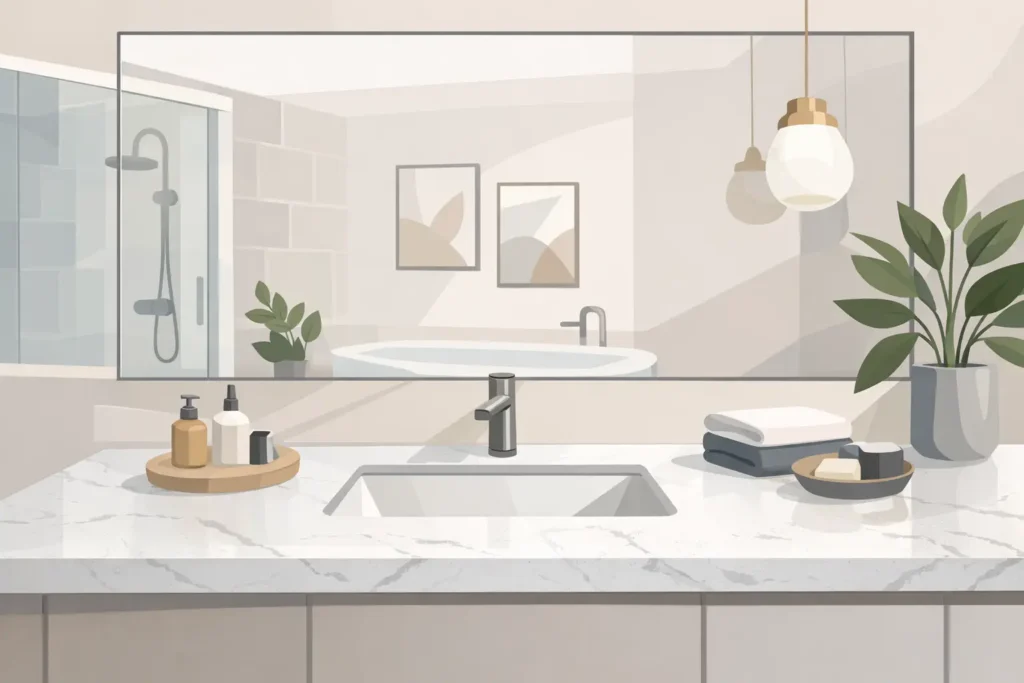
A bathroom vanity is usually a small surface, but it takes a lot of daily abuse. Wet toothbrushes, makeup spills, hair products, kids climbing up for the sink, and the occasional hot styling tool all land there. That is why quartz bathroom vanity tops are one of the smartest upgrades for homeowners who want a clean look without signing up for constant maintenance.
Quartz works especially well in Indianapolis-area bathroom remodels because it offers a high-end stone appearance with a more predictable care routine. You can get a bright white top for a Carmel primary bath, a soft marble-look pattern for a Fishers hall bathroom, or a darker modern color for a Greenwood rental property. The right choice depends on how the bathroom is used, what you want to spend, and how closely you want the vanity to match the rest of the home.
Why Quartz Bathroom Vanity Tops Work So Well
Quartz is an engineered stone surface made with natural quartz minerals, resin, and pigments. That combination creates a hard, nonporous countertop that does not need sealing. For a bathroom, that matters. Water, toothpaste, soap, foundation, and hand soap tend to sit on vanity tops longer than people realize.
With natural stone, some materials need periodic sealing to help resist moisture and staining. Quartz does not. Wipe up normal messes with mild soap, water, and a soft cloth, and the surface stays easy to live with. That is a major selling point for busy families, property owners, and anyone who does not want another maintenance project on the calendar.
Quartz also gives you consistency. Natural granite has one-of-a-kind movement and color variation, which many homeowners love. But if you need two matching vanity tops, or you are renovating several units in a rental property, quartz can make color coordination much simpler. You know more closely what you are getting before fabrication begins.
That said, quartz is not automatically the right answer for every bathroom. If you love bold, natural movement and want each vanity to look truly unique, granite may be the better fit. Granite also handles heat better than quartz. Most bathroom vanities are not exposed to high heat often, but hot curling irons and flat irons should still go on a heat-resistant mat instead of directly on any countertop.
Choosing the Right Quartz Vanity Color and Style
The best vanity top is not always the lightest, whitest, or most dramatic slab in the warehouse. It is the one that works with the room you actually have.
In a smaller bathroom, light quartz can make the space feel more open. White, warm gray, cream, and soft beige tops pair easily with painted cabinets and most tile selections. A subtle pattern can add interest without competing with a busy floor or shower surround.
For a larger primary bathroom, you have more room to make a statement. Marble-look quartz with soft gray or taupe veining remains popular because it delivers a polished look without the sealing and stain concerns that can come with natural marble. Dark charcoal, black, or deep brown quartz can also look sharp on light cabinetry, though darker tops may show dried water spots and dust more easily.
Think about the undertones before you decide. A bright white quartz with cool gray veins can clash with cream tile or warm wood cabinets. Likewise, a beige countertop may look yellow next to cool blue-gray paint. This is where seeing full slabs in person helps. A small sample can be useful, but it does not show the full pattern, movement, or color variation you will see across the finished vanity.
At Granite Networks Indy, we help customers narrow down the options and visit preferred stone distribution centers rather than sending them on a long showroom tour. You can see the actual material, compare it against your cabinet and tile samples, and make a confident choice without guessing from a tiny swatch.
Pattern Scale Matters More Than Most People Expect
A large, dramatic vein can look great on a long double vanity. On a 30-inch guest-bath vanity, that same pattern may be cut in a way that shows very little movement or puts one heavy vein in an awkward spot. Smaller vanities often look best with a quieter pattern, while larger tops can carry bolder movement.
It also matters whether you are adding a matching quartz backsplash. A 4-inch backsplash is practical and common, but a full-height quartz backsplash creates a more finished, custom look. It costs more because it requires additional material and fabrication, so it makes the most sense when the bathroom design calls for it.
Size, Sink, and Edge Choices Before Fabrication
Quartz vanity tops are not a one-size-fits-all purchase. Accurate measurements are what keep a good-looking countertop from becoming an expensive problem. Wall-to-wall bathrooms, out-of-square walls, side splashes, and faucet placement all affect the final template and cut.
A standard single vanity may be 24, 30, 36, or 48 inches wide. Double vanities are often 60, 72, or 84 inches wide. But cabinet size is only the starting point. You also need to decide on the overhang, whether the top will die into a wall, and if it needs one or two side splashes.
Sink selection should happen early. Most homeowners choose an undermount sink for quartz because it gives the top a cleaner line and makes it easier to wipe water straight into the basin. Drop-in sinks can work too, especially when replacing an existing top, but the rim collects more debris and changes the finished look.
Faucet holes are another detail that is easy to overlook. Some faucets need one hole, while widespread faucets need three. Your installer needs the faucet specification before fabrication, especially if you want the holes positioned around a particular sink or vanity cabinet layout.
For the edge, a simple eased edge is the most common choice. It is clean, comfortable, and works with nearly any style. More decorative edges are available, but bathrooms usually benefit from keeping the profile simple. The money is often better spent on a larger sink, better faucet, matching backsplash, or upgraded lighting.
What Affects the Cost of a Quartz Vanity Top?
Bathroom countertop pricing is not just about the square footage. The quartz color group, thickness, edge detail, sink cutout, faucet holes, backsplashes, removal of the old top, and installation access all play a part.
A small vanity can be tricky because many traditional countertop sellers price around full slabs or have minimum charges that make a compact project feel overpriced. Homeowners should ask how the material is being priced and whether they are paying for stone they do not need. Granite Networks Indy prices by the square foot needed rather than forcing customers to buy an entire slab, which can make a bathroom upgrade much more reasonable.
The least expensive option is not always the best value, either. A low quote may leave out sink installation, old countertop removal, plumbing disconnects, backsplash pieces, or templating. Ask what is included before comparing bids. A clear quote beats a cheap-looking number that grows after the job is underway.
For flippers and rental-property owners, quartz is often worth the upfront cost because it holds up well, photographs nicely, and gives a bathroom a finished appearance that buyers and tenants notice. For a basic guest bathroom where budget is extremely tight, a simpler quartz color, standard edge, and existing vanity cabinet can keep the project under control.
The Installation Process Should Not Be Complicated
A smooth quartz vanity project starts with a plan, not a rushed material order. First, the cabinet needs to be installed, level, and secured. If you are keeping the existing vanity base, it should be checked for water damage, sagging, and level issues before anyone measures for a new top.
After selections are made, measurements and fabrication details are confirmed. The quartz is cut for the sink, faucet holes, and any backsplash pieces. On installation day, the old top is removed if that service is included, the new countertop is set, and the sink is installed according to the project plan.
Plumbing hookups are usually handled after the countertop and sink are in place. Make sure you know who is reconnecting the faucet, drain, and water lines. This is a common point of confusion, and it is better to have the answer before installation day than to be stuck with a beautiful vanity and no working sink.
If your bathroom has wallpaper, delicate paint, or tight tilework, mention it during the planning stage. Stone installation is careful work, but clear communication about the room helps prevent surprises.
Caring for Quartz After Installation
The everyday routine is simple: use a soft cloth, warm water, and mild dish soap when needed. Dry the surface after cleaning if you want to reduce water spots, particularly on darker colors.
Avoid abrasive scrub pads, harsh oven cleaners, paint removers, and highly aggressive chemicals. Quartz is durable, not indestructible. Do not cut directly on it, and do not leave a hot styling tool on the surface. If hair dye, nail polish, or makeup sits for a while, clean it promptly instead of letting it cure on the countertop.
One more practical point: quartz does not need sealing. If someone tells you your new quartz vanity requires annual sealing, stop and ask questions. That is a maintenance step for many natural stone surfaces, not standard quartz care.
A well-chosen vanity top makes the whole bathroom feel more intentional, even if you are not doing a full gut renovation. Bring your cabinet color, tile sample, and faucet finish to the selection process, ask what is included in the price, and choose a quartz surface that fits how your household actually lives. The goal is not to make countertop shopping harder. It is to get a bathroom you like using every morning.